
Golf Study Program
Serious golf lessons from the pro who coached a U.S. Women’s Open champion
7 benefits (reasons)
to practice golf in the Philippines
1: Warm climate
The Philippines enjoys a warm climate all year round, so you can practice golf in any season. Because you can practice in warm weather even in winter, it is an ideal place for golfers from cold regions to maintain and improve their skills during the winter months.
2: Beautiful golf courses
The Philippines has world-famous golf courses and resorts. Many courses are designed to make the most of beautiful natural scenery, so you can enjoy practicing in a relaxed environment. World-class courses are found around Manila, Cebu and Davao, offering resort enjoyment as well as practice.
3: Cost performance
Playing and practicing golf in the Philippines is relatively affordable. Course fees and lesson fees are lower than in other countries, so you can practice often while keeping costs down. At resorts in particular, golf packages can reduce costs further.
4: Lessons from professionals
The Philippines has many experienced golf pros and instructors offering high-quality lessons. Many instructors speak English, so golfers from abroad can take lessons with confidence.
5: Excellent golf facilities
Urban areas of the Philippines have many practice facilities, putting greens and driving ranges with everything you need to improve. Many ranges are open at night, so you can practice after work or study.
6: Combine with sightseeing
With many beautiful beaches and tourist attractions, you can combine golf practice with sightseeing and enjoy a relaxing holiday as well as golf.
7: Opportunities to enter competitions and tournaments
Domestic and international tournaments are held frequently in the Philippines, and you can enter competitions as part of your training, gaining real competitive experience that improves your skills.
For these reasons, practicing golf in the Philippines is an attractive choice for improving your skills while having fun.
Strengths of Grandline’s Golf Study Program
1: Low cost
Golf study in Europe or North America is expensive, but with our service you can improve both your language and golf skills at less than half the cost of studying there. The Philippines is also popular for its relatively low cost of living, allowing a very reasonable and comfortable life compared with other countries.
2: Close to Japan
The flight from Japan to the Philippines is about 4 hours — roughly one third of the time to Europe or North America.
It is close enough for anyone to visit easily, including first-time travelers abroad. Our office is in Makati, Manila, within an hour of each golf course.
3: One caddie and one cart per person for exceptionally comfortable golf
When playing golf in Europe or North America, there is usually no caddie and you play on your own, and carts are often shared by a group. In our program, each guest has their own caddie and golf cart, providing a safe and comfortable golf environment.
4: A flexible, relaxing environment
Dress codes and other rules are more flexible than in Europe or North America, so you can focus on improving your technique in comfort.
5: Coaching and supervision by top-class professionals
While many programs are taught by unknown coaches who may not even be tournament pros, our coaches are among the very best professionals in the Philippines. In particular, Mr. Artemio Murakami is a top pro known to everyone involved in golf in the Philippines, including lesson pros at city driving ranges, and serves as head coach of the Philippine junior golf association, aiming to develop the next world champion after Yuka Saso. Coach Michael Bibat is also a top Philippine pro.
.6: A comfortable stay
You stay in Makati, Manila, by far one of the safest areas in the Philippines, where many Japanese companies have offices in the business district. There is a wide choice of food, and you can easily enjoy not only Filipino cuisine but also Japanese and Korean food.
7: A wide choice of golf courses
With large new courses opening in recent years, the Philippines has about 70 golf courses, more than half of them around Makati.
8: Tournaments
Many golf tournaments are held in Makati, and many professionals from Japan take part.
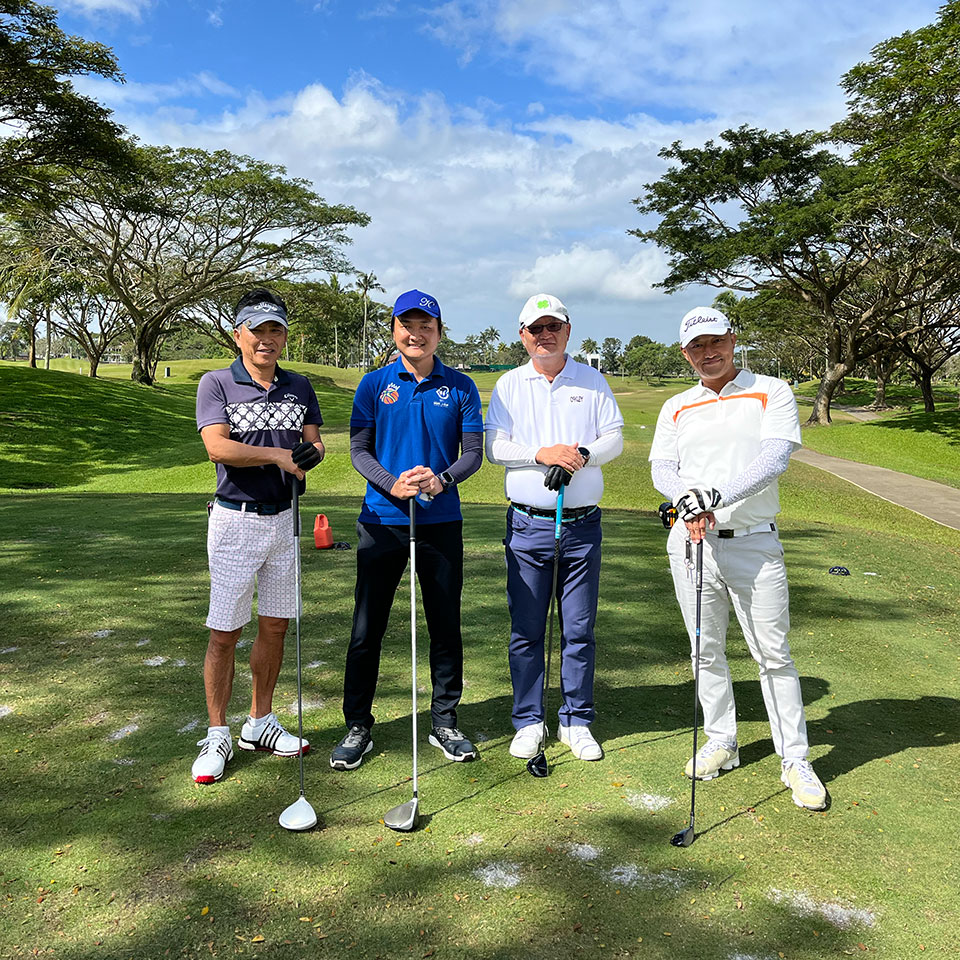
To dramatically improve your golf in a short time, choose a golf study program!
Score: around 100
Golf study program overview
Capacity: 8 per week
Season: December–May
Location: Manila, Philippines
At Philippine golf courses each player has their own caddie, and you communicate with your caddie in English. With English lessons in the morning and golf lessons in the afternoon, you gain two skills at once.
Mr. Artemio Murakami
The curriculum is supervised by
Mr.
Artemio Murakami, known as “the Jumbo Ozaki of the Philippines”.
He has the ability to have beaten a young Ryo Ishikawa, and is known to many golfers as a leading figure in Philippine golf after Mike Mimoza.
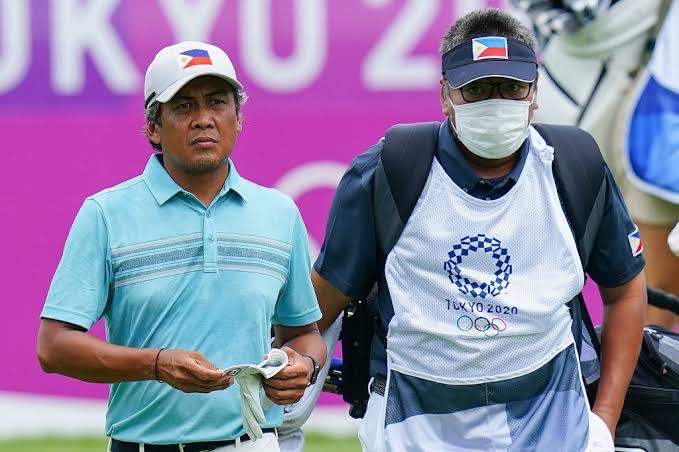
“Mr.
Artemio Murakami caddying for Philippine representative Pagunsan at the Tokyo Olympics”
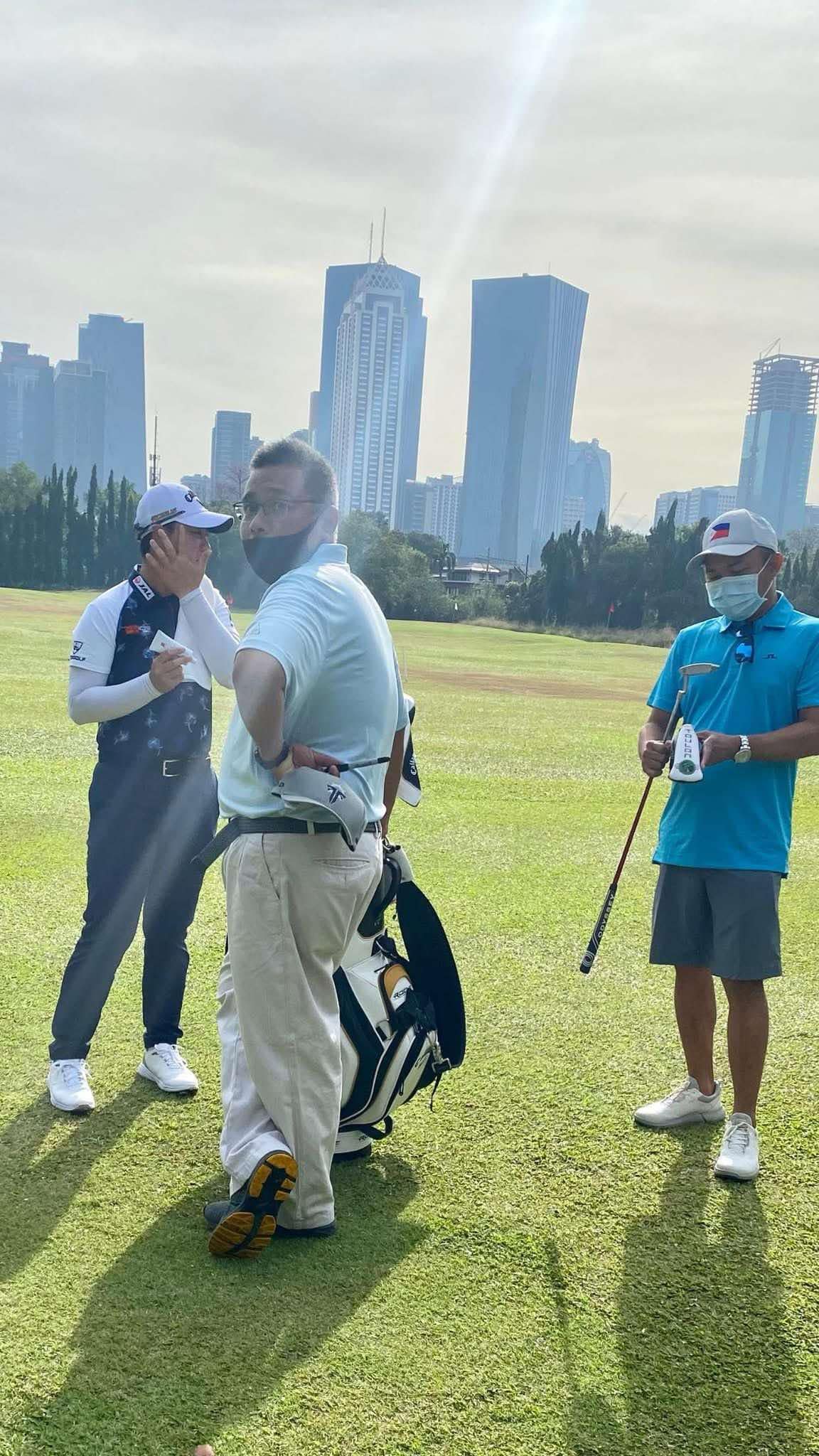
“Mr. Artemio Murakami coaching Philippine representatives Yuka Saso and Pagunsan at the Tokyo Olympics”
Golf curriculum supervisor
Director / Mr. Artemio Murakami
Height 170 cm, weight 95 kg, blood type A, born July 22, 1983 (age 40), Filipino. Started golf at 8 and won the national high school championship. After turning pro in 2004 he won twice on the Asian Tour and competed on the U.S. tour. Played in the 2008 U.S. Open. Philippine Tour money leader in 2010 and winner of the Philippine Tour Grand Slam.
Recently, he has coached two-time U.S. Women’s Open champion Yuka Saso since she was in elementary school, thoroughly improving the accuracy of her approaches within 100 yards. Saso still receives his special coaching when she is in the Philippines.
Golf curriculum coaches
Top Philippine professionals who are students of Mr. Artemio Murakami, such as those below, will coach you.* You can choose a male or female coach.
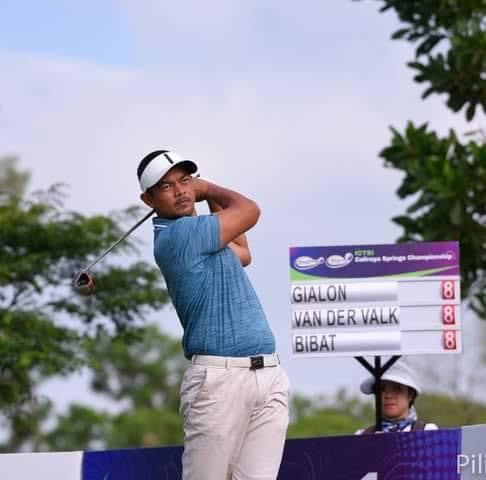
Coach / Mr. Michael Bibat
(2004)
・Singapore Amateur champion
(2005)
・Southeast Asian Games gold medal
(2006)
・Asian Games golf
・Two-time Philippine Tour money leader
Coach / Ms. Marvi Monsalve
・Named to the NCAA Division II All-American team
・PacWest Golfer of the Year (twice)
・Winner of the Dallas Baptist Women’s Classic / set the program’s two-round tournament record
・Intercollegiate champion

Coach / Ms. Jayvie Agojo
・Winner of the Singha-Sat Thai LPGA Championship ・Winner of the Philippine Ladies Open Championship ・2nd at the SEA Games
・Winner of the ICTSI Riviera Ladies Classic
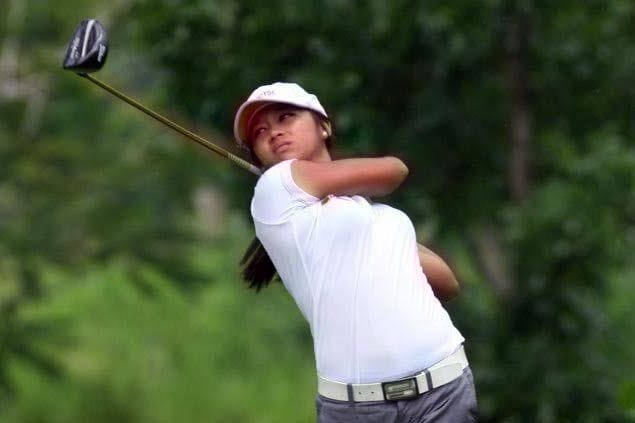
Video of Mr. Artemio Murakami coaching Yuka Saso
Recommended by professional golfers too!
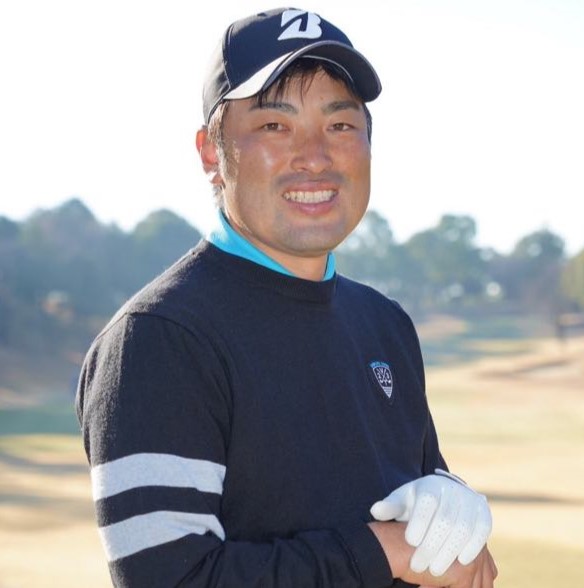
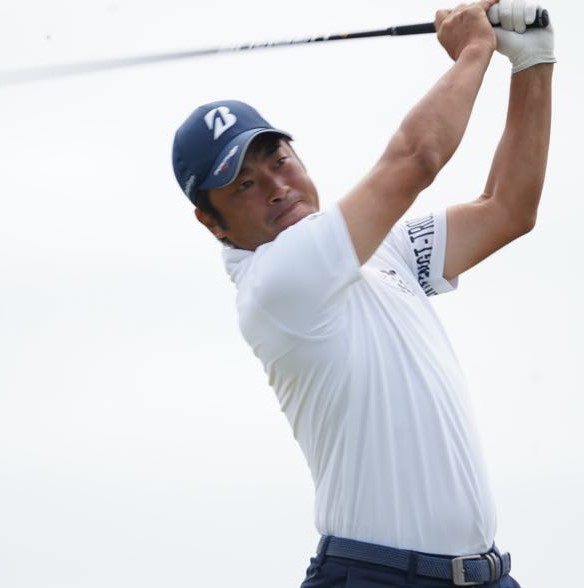
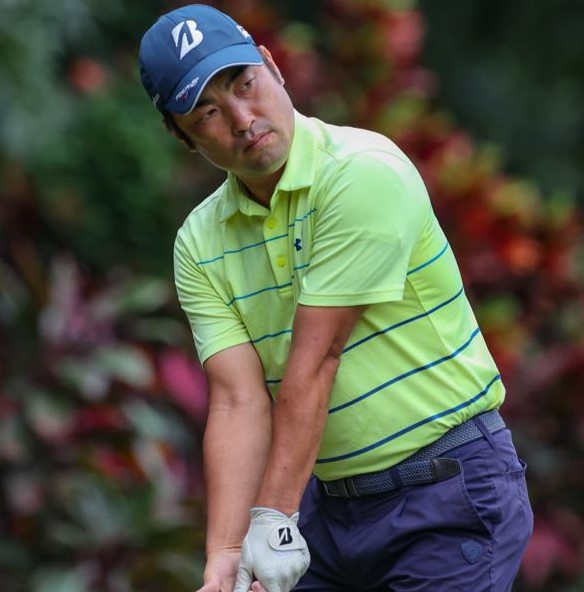
Pro Toru Nakajima
Comment
A golf study program is a great opportunity to achieve both technical improvement and personal growth. At overseas facilities you can learn advanced skills from professional coaches and experience play in different climates and course designs. At the same time, you can polish your English and international sense — I hope you find the ideal plan for your goals.
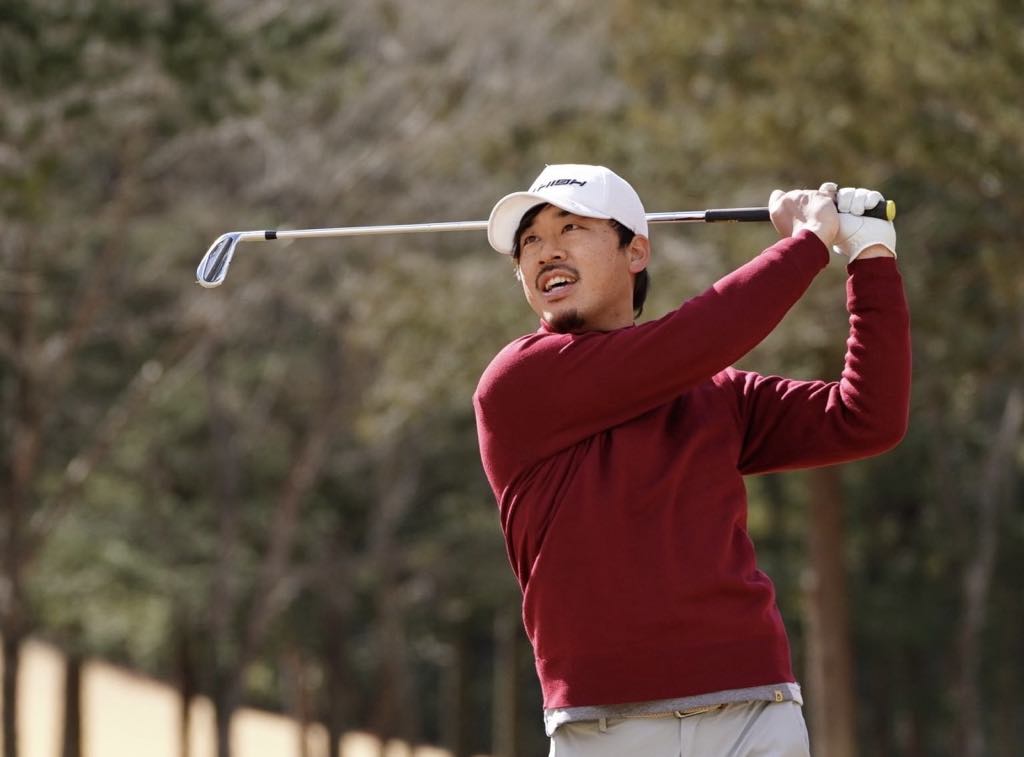
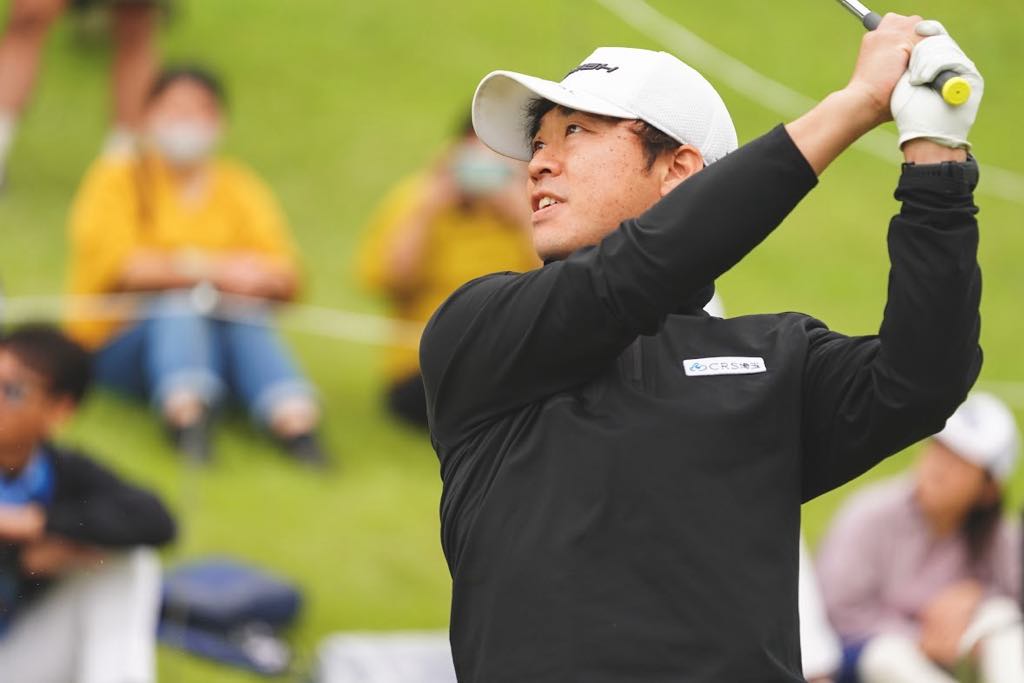
Pro Yuta Sudo
Comment
In the Philippines, where golf is popular, professional coaching and state-of-the-art facilities contribute greatly to improving your skills. Grandline’s golf program, which lets you balance study and golf, is a valuable experience that shapes not only technique but also character and career, developing your all-round skills.
Pro Shota Ota
Comment
Golf is a sport used in business too. Improving your English communication helps you build smooth relationships with overseas clients and partners. Many golf courses in the Philippines have excellent facilities for honing technique, offering an ideal environment to combine English and golf.
It is an ideal choice that contributes to your career and personal growth. Please give it a try!
Mr. Artemio Murakami
Curriculum supervisor
Like English, golf is about overcoming the obstacles in front of you one by one. Whether you want to enjoy getting better at golf or are taking on the challenge of competing globally, I would be glad to help you clear each of the goals you have set.
The Philippines offers an environment where you can enjoy golf to the fullest without pressure, and I look forward to meeting you.
Weekly schedule
| Time | Mon–Thu | Fri |
|---|---|---|
| 9:30 – 12:30 | Everyday English conversation | Course lesson |
| 12:30 – 14:00 | Lunch | Lunch |
| 14:00 – 17:00 | Golf lesson | Course lesson |
Monday–Thursday
(Morning) 9:00 – 12:00
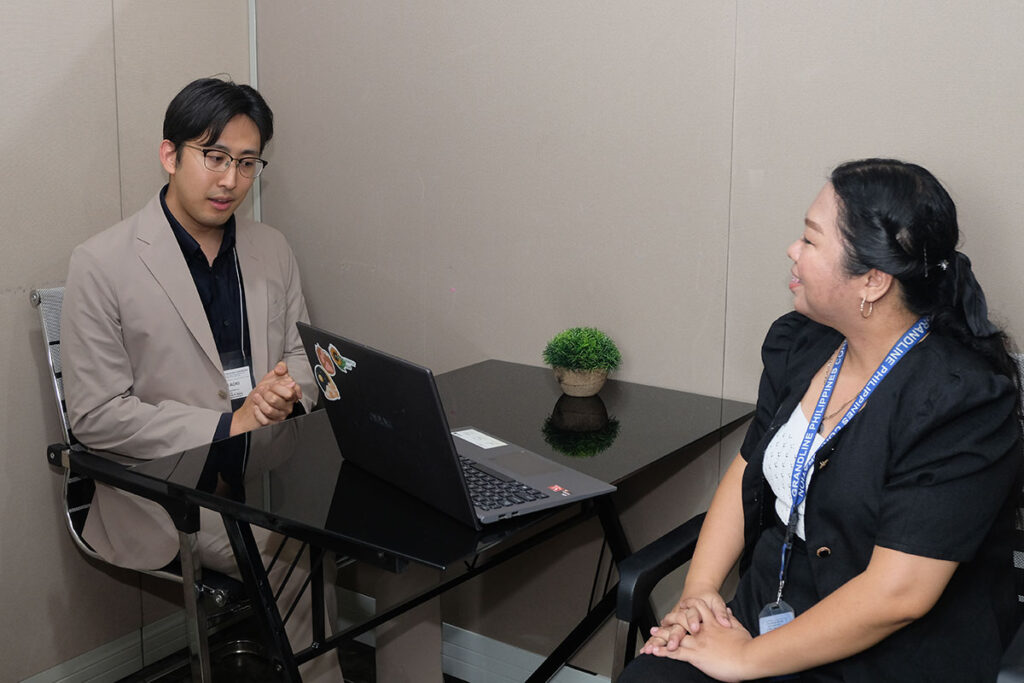
・Language training
In the morning, you take language training at our office.
Content is as follows:
– Everyday English conversation
– English skills needed to play golf abroad
Monday–Thursday
(Afternoon) 14:00 – 17:00
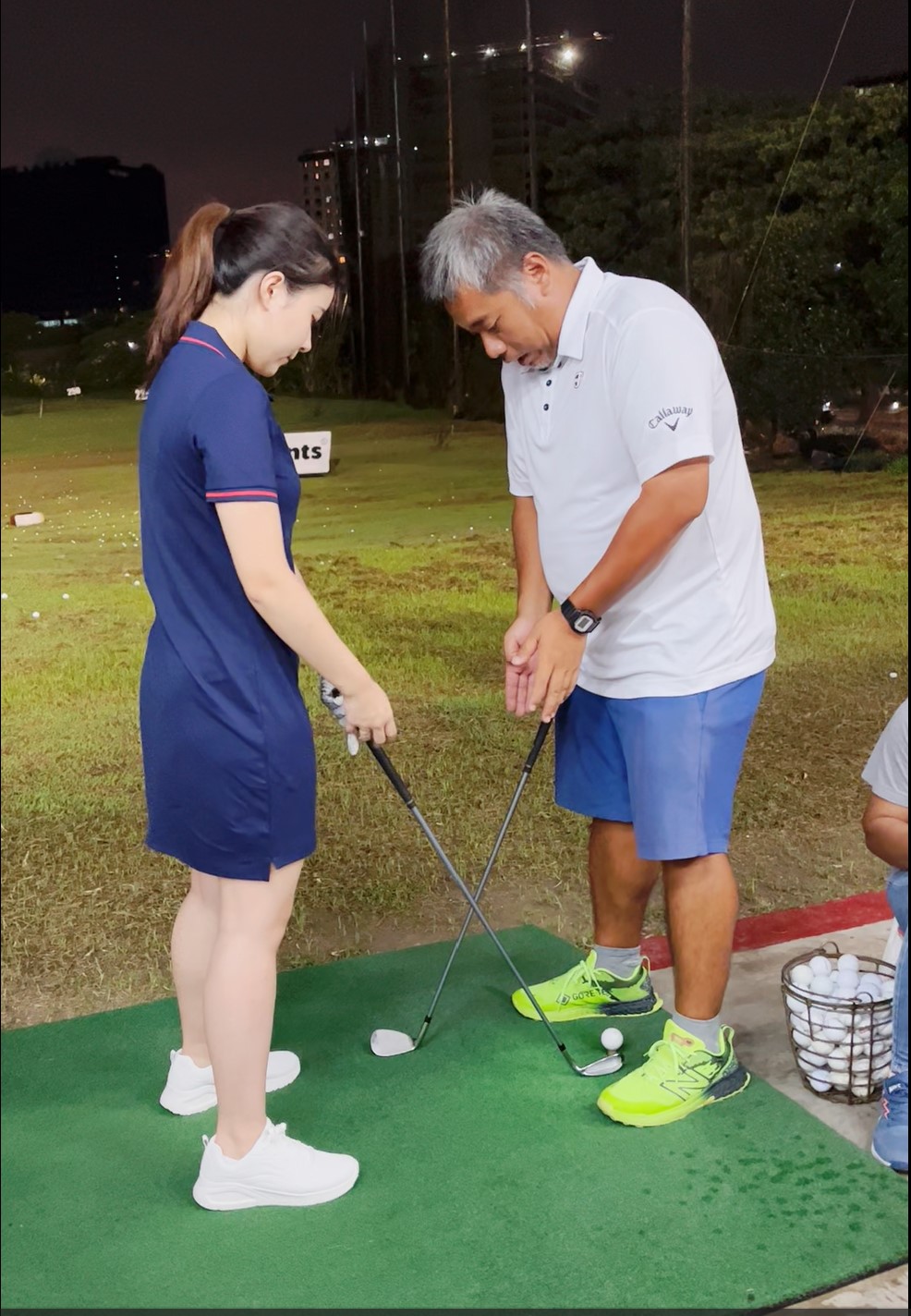
・Golf lessons
with a coach
In the afternoon, you take golf lessons at a driving range.
*An experienced coach supports you one-on-one throughout.
Friday (all day)
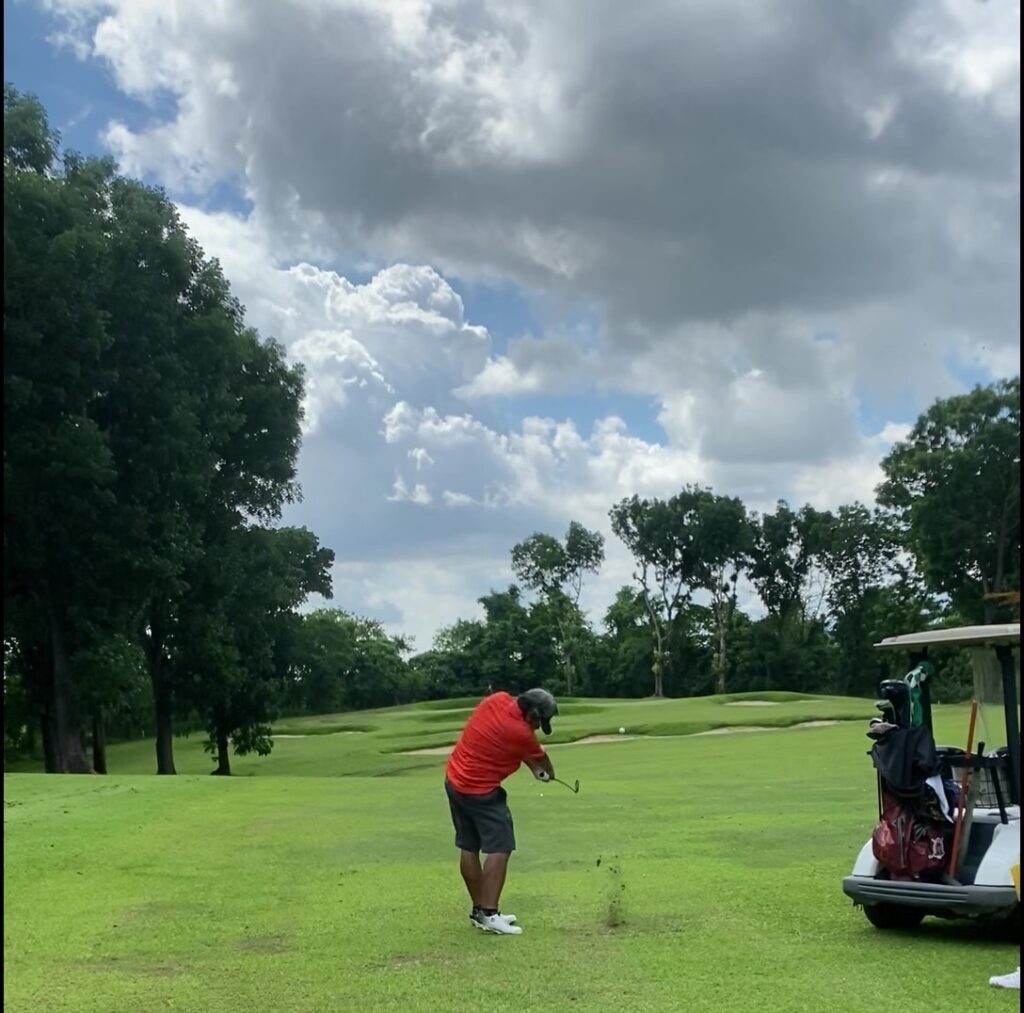
Course lesson
You take golf lessons all day at a course frequently used by professionals on overseas tours.
* Before the round, the coach gives technical instruction.
Golf lesson menu
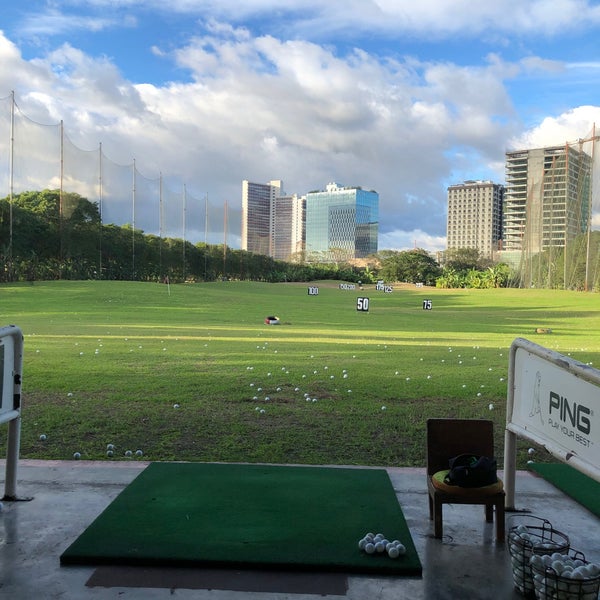
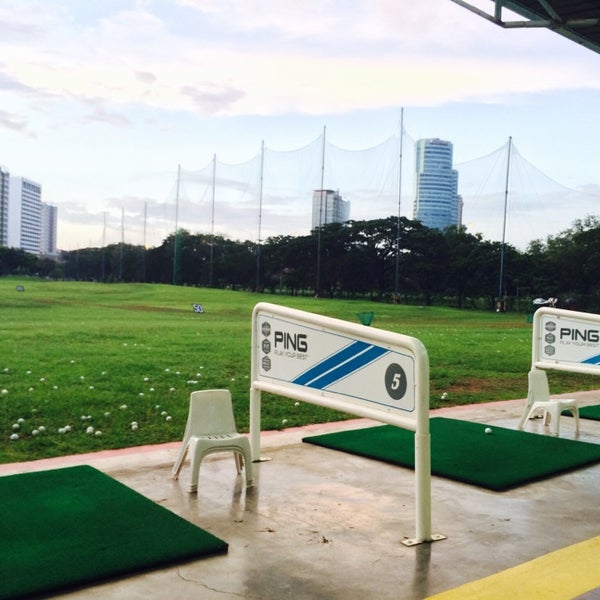
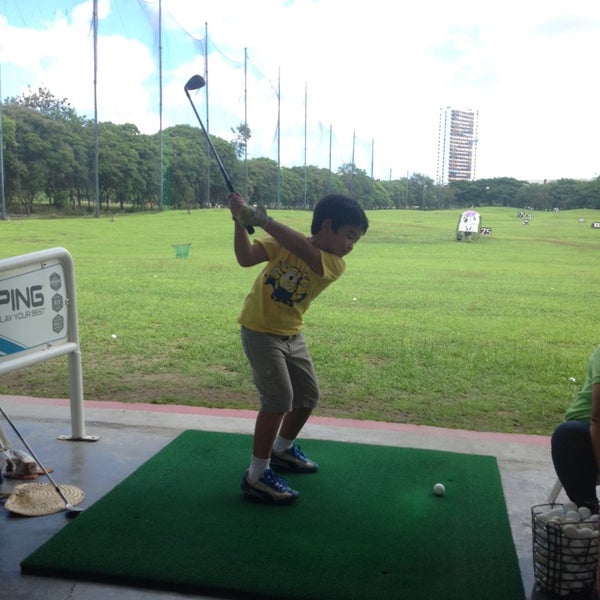
Driving range practice chosen according to your wishes
- Basic practice
- Short game technique (within 30 yards)
- Approach control (20–100 yards)
- Mid-iron and long-iron control
- Driver control (draw / fade)
- Swing for more distance
Driving range
Planned at the Alabang driving range near Makati.
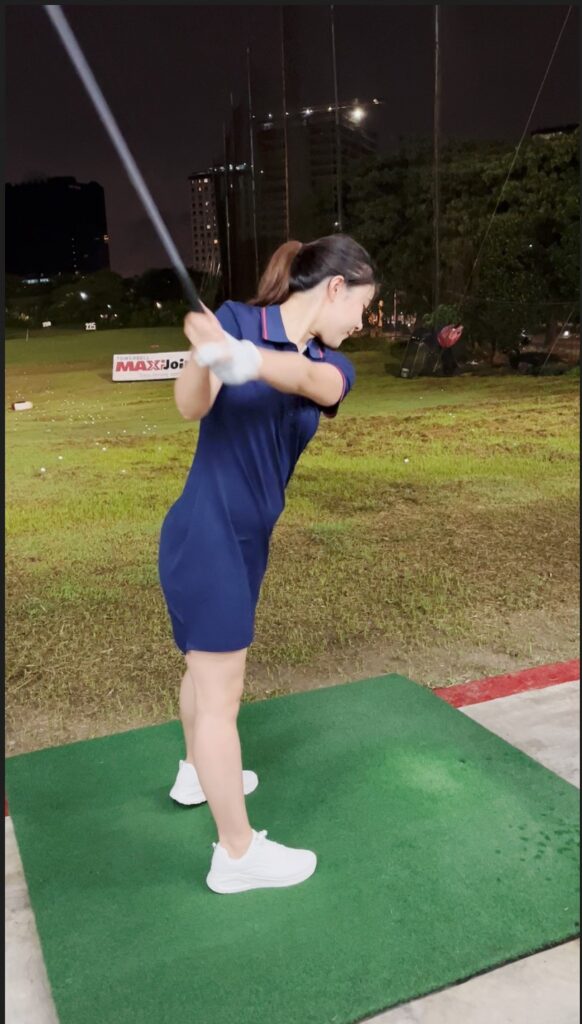
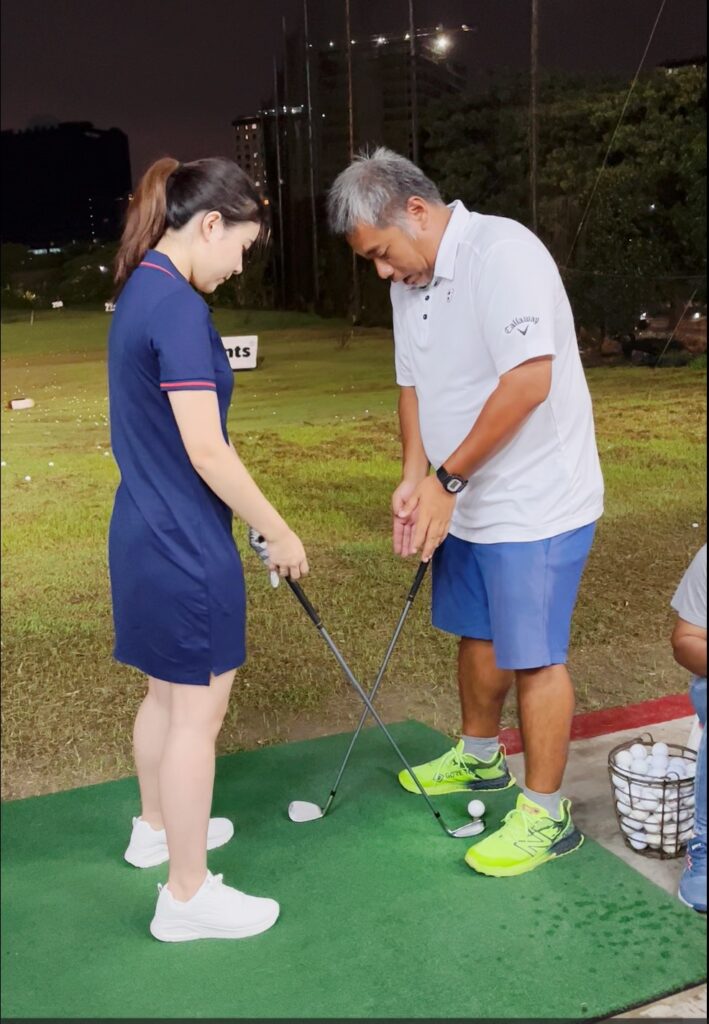
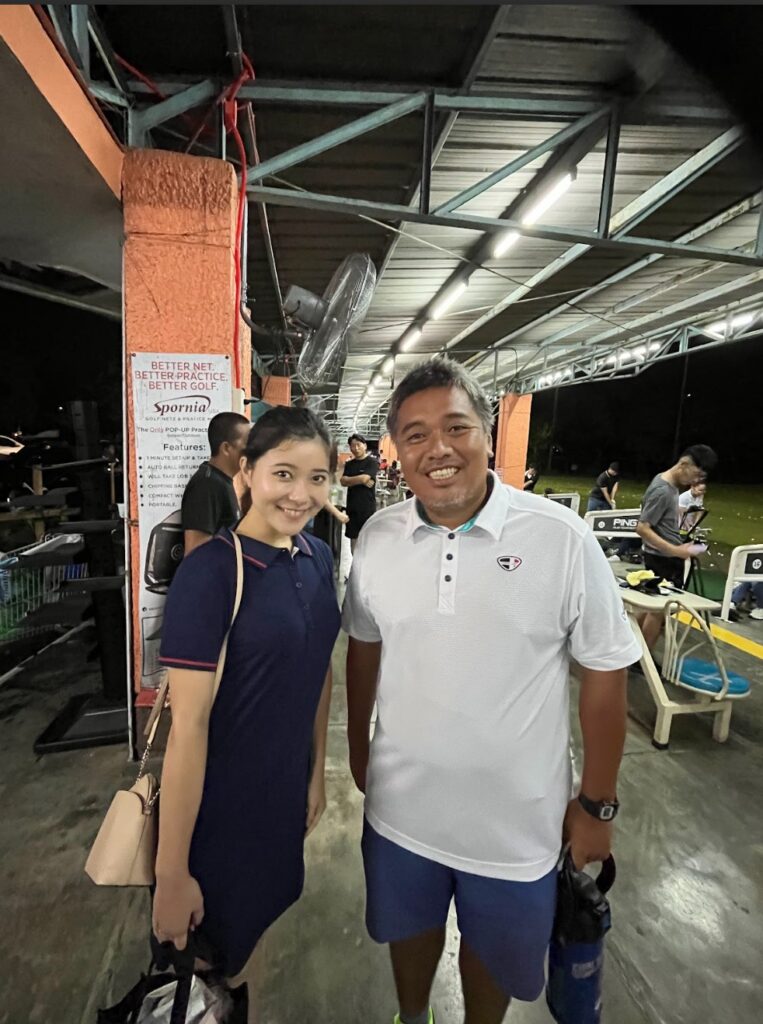
Alabang South Point Driving Range
Golf courses you can play
・Canlubang Golf & Country Club
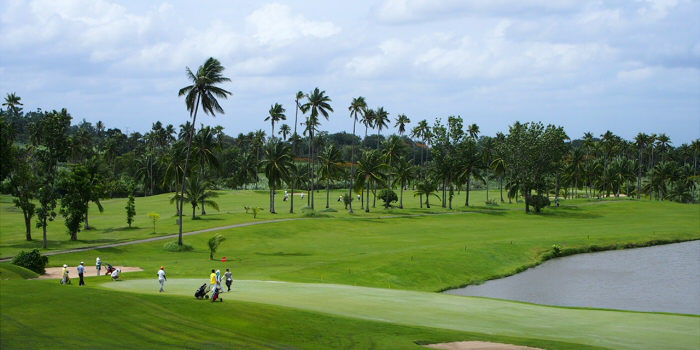
Features
A 36-hole facility with 18 holes each on the North and South courses. The 17th on the North course, played over a pond, and the 6th on the South course, played over a ravine, are especially difficult — many players enjoy the challenge but struggle.
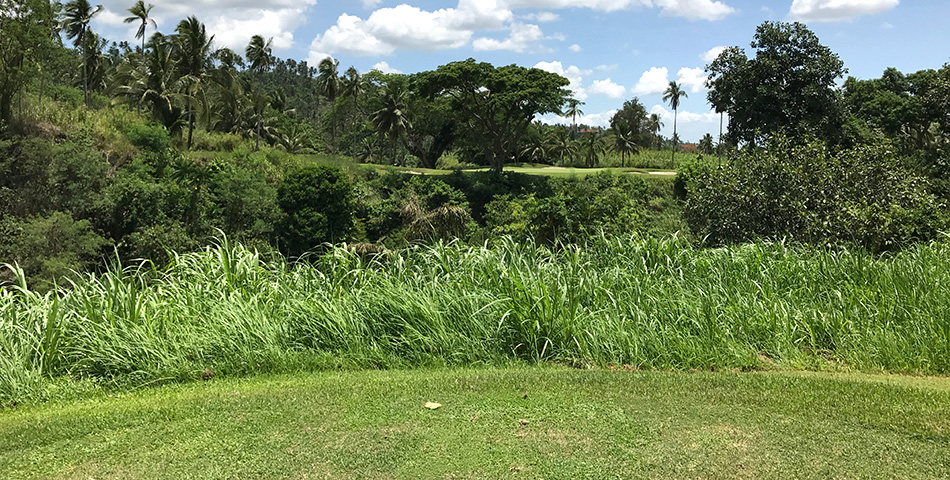
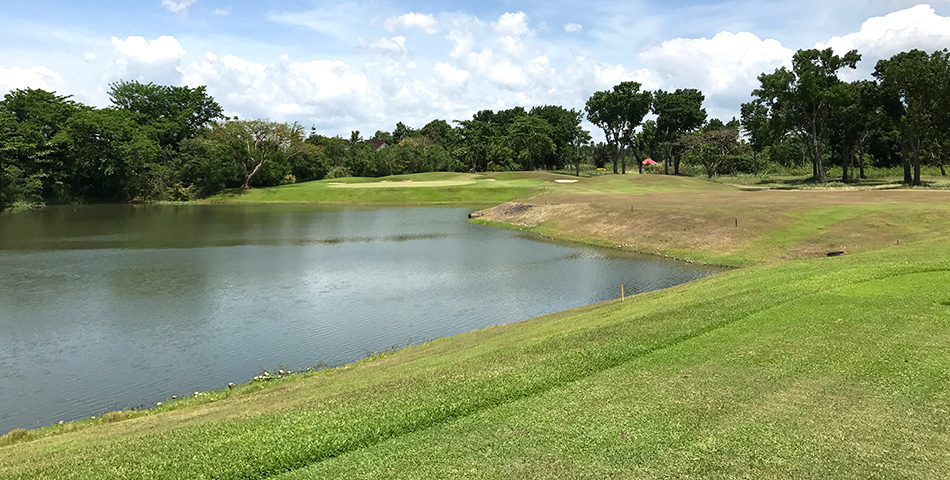
| Holes | 36 holes in total ・North course: 18 holes – Par 72, 6,872 yards ・South course: 18 holes – Par 72, 6,872 yards |
| Green fee | * Must be accompanied by a member Weekdays: 1,550 PHP Weekends/holidays: 4,050 PHP |
| Style | 18-hole through play |
| Hours | ・Reception: 5:30 – 15:00 ・Clubhouse: 5:30 – 19:00 |
| Dress code | Clubhouse: no particular rules Round: shorts OK Jeans and collarless shirts not allowed |
| Spikes | Soft spikes / spikeless: recommended Metal spikes: allowed |
| Green type | Tifton |
| Cart type | Self-drive 2-seater; not allowed on greens |
| Bathing facilities | Bath: no Shower: yes Sauna: no Jacuzzi: no |
| Night lighting | None |
| Practice range | Yes 16 bays, 25 PHP per basket |
| Rental clubs | Yes: P800 |
| Rental shoes | Yes: P250 |
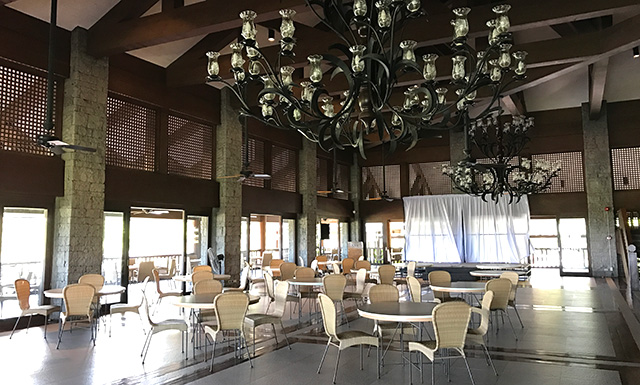
The restaurant on the 2nd floor of the clubhouse overlooks the greens of the 9th and 18th holes.
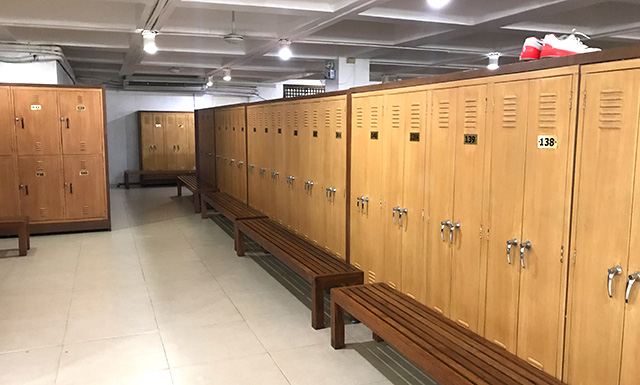
The locker rooms are clean and spacious, letting you prepare for your round stress-free.
・Tagaytay Midlands
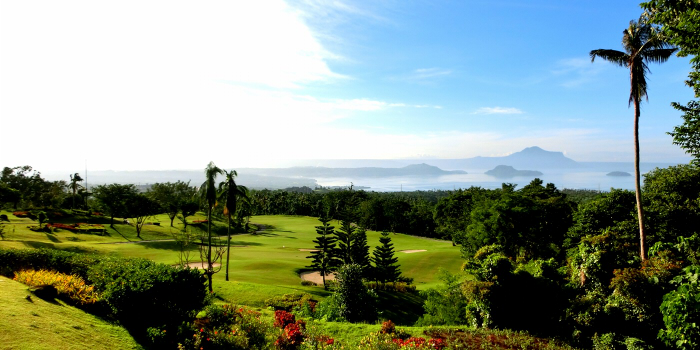
* Difficult for shorter hitters
Features
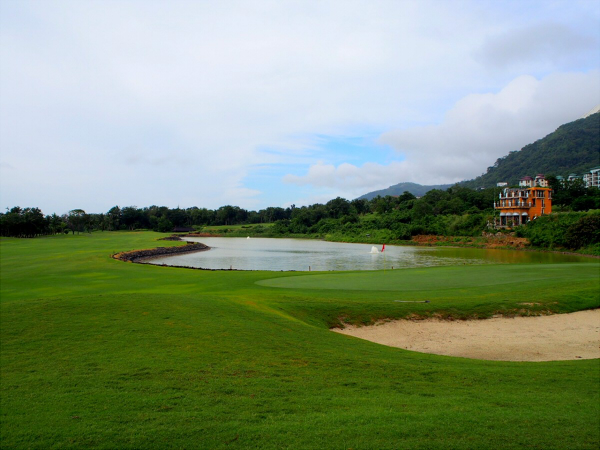
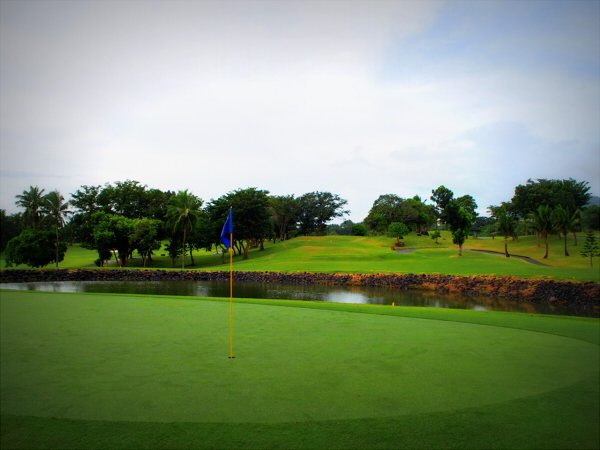
A spacious course with great views that doesn’t look difficult, but mountain winds and fast greens raise the difficulty. On your first round, your caddie’s advice is essential. The par-3 3rd hole has a strategically placed pond and bunkers, a wide shallow green and mountain winds that make club selection hard. The next hole, the 4th, is also surrounded by water; if you hit too far right to avoid the pond, it is hard to reach the green in regulation, so you play under the pressure of the water. A bogey is a good result on this very challenging hole.
| Holes | 27 holes in total ・Blue: 18 holes – Par 72, 6,708 yards ・Lucky Nine: 9 holes – Par 36, 3,029 yards |
| Green fee | * Member introduction required (Weekdays) 9 holes: 550 PHP 18 holes: 1,100 PHP (Weekends/holidays) 9 holes: 950 PHP 18 holes: 1,900 PHP |
| Hours | Hours: 7:00 – 19:00 * Golf course from 6:00 |
| Dress code | Clubhouse: no particular rules Round: collared shirt and golf shorts or slacks Denim: not allowed |
| Spikes | Soft spikes required |
| Green type | Tifton |
| Golf cart | Yes: fairway driving allowed |
| Bathing facilities | Locker room with jacuzzi (men only) Sauna Men’s lockers: 308 Women’s lockers: 144 |
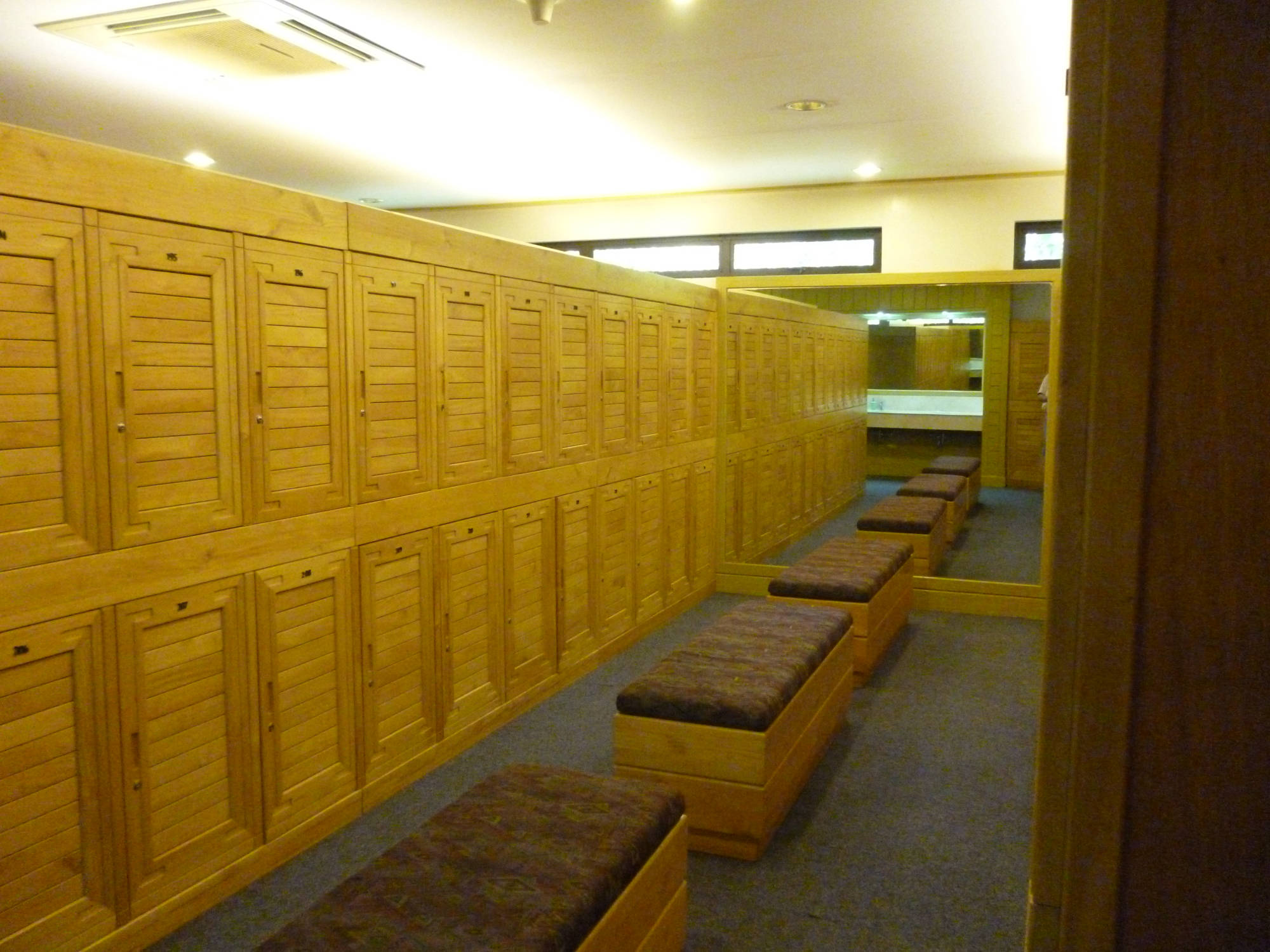
The locker rooms are clean and spacious, letting you prepare for your round stress-free.
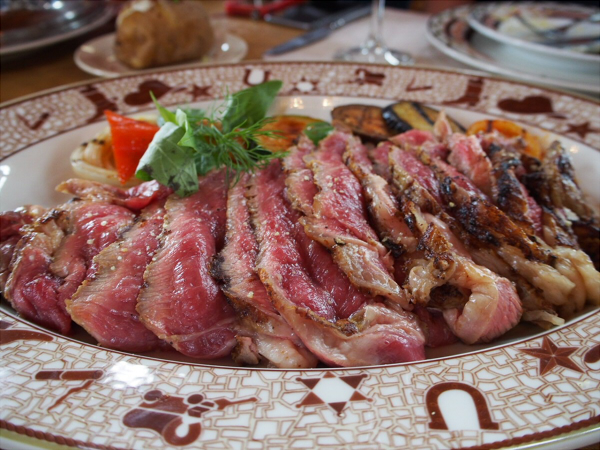
After your round, enjoy a meal at the resort’s restaurants. The steakhouse is especially recommended, with quality rivaling famous restaurants in Metro Manila.
・Tagaytay Highlands Golf and Country Club
Features
Located in Tagaytay Highlands, an upscale residential area of Tagaytay,
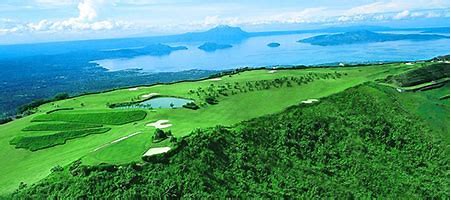
this course sits higher than Midlands with spectacular views of Taal Lake. It has 18 holes with high-quality turf, and you need a car to get to the 10th hole. Overall the course is short, but narrow holes, artificial ponds, bunkers, hills and valleys demand accurate shots. The clubhouse has a mini-golf course for children, so families can enjoy it too.
Bold challenges include the 13th tee, 84 meters above the green, and the 18th hole, where a 150-yard-wide ravine is the test.
| Holes | 18 holes in total Par 70, 6,119 yards |
| Green fee | * Member introduction required Weekdays: 1,800 PHP Weekends/holidays: 2,500 PHP |
| Hours | Hours: 7:00 – 19:00 * Golf course from 6:00 |
| Dress code | Clubhouse: no particular rules Round: collared shirt and golf shorts or slacks Denim: not allowed |
| Green type | Tifton and Tifdwarf grass |
| Golf cart | Golf cart required on holes 2–9 and 11–18 |
| Bathing facilities | Sauna: yes Men’s lockers: 205 Women’s lockers: 72 |
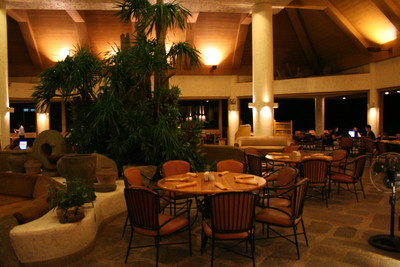
Enjoy meals at the specialty restaurants on site in a pleasant atmosphere.
・Sherwood Hills Golf Club
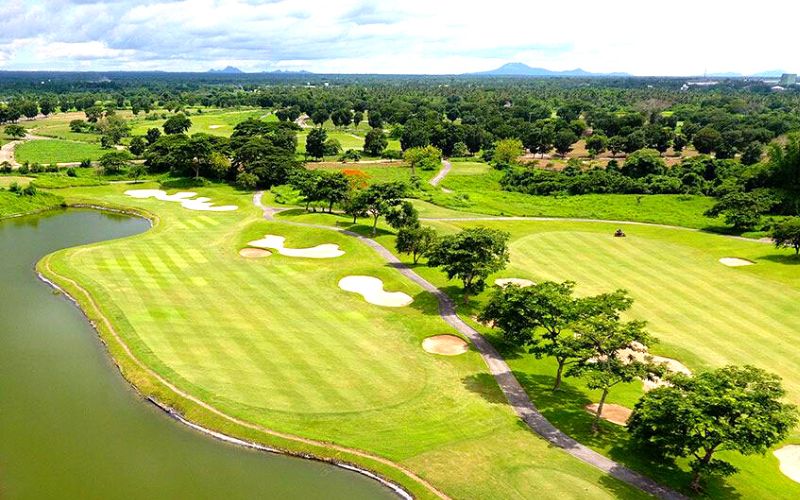
Features
Known for challenging design with blind holes and carries over ponds and cliffs. On your first round, unless you play with someone who knows the course well, you may struggle not knowing where to aim. Every hole has its difficulties, and the course is famous for being hard to master.
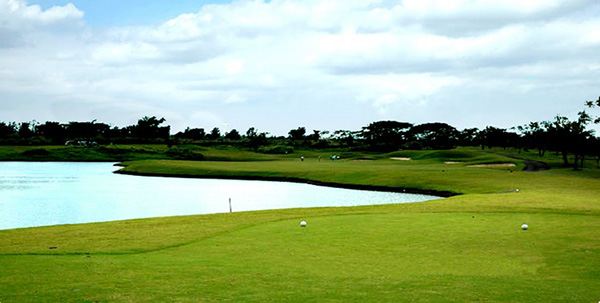
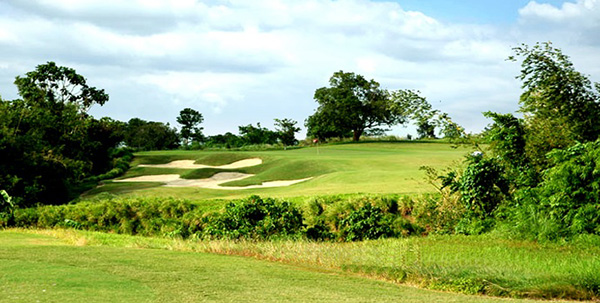
| Holes | 18 holes in total Par 70, 7,277 yards |
| Green fee | Weekdays: 2,500 PHP (hotel guests P1,200) Holidays: 3,500 PHP (hotel guests P2,500) |
| Hours | Reception: 5:30–15:00 |
| Round style | 18-hole through play |
| Dress code | Clubhouse: no particular rules Round: shorts OK; jeans and collarless shirts not allowed |
| Green type | Tifton |
| Golf cart | Self-drive 2-seater; not allowed on greens |
| Bathing facilities | Bath: no Shower: yes Sauna: yes Jacuzzi: no |
| Night lighting | None |
| Practice range | Yes, 16 bays, 50 PHP per basket |
| Rental clubs | Yes: 850 PHP |
| Rental shoes | Yes: 400 PHP |
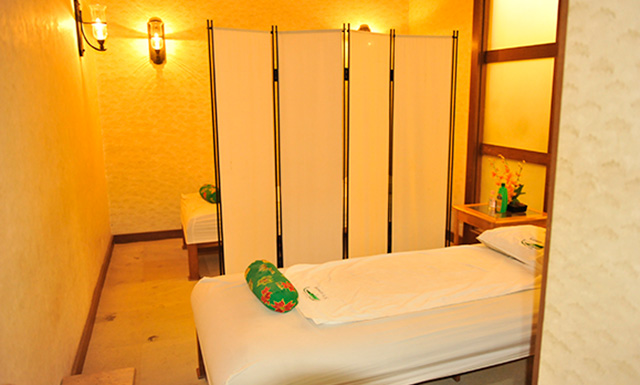
Massages are available in the clubhouse at reasonable prices — a nice way to care for your tired body after a round.
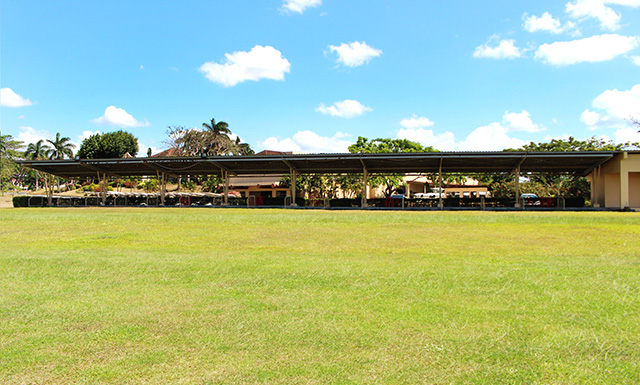
Besides the driving range available before your round, there is a practice course for putting, bunker shots and other practical training.
・Summit Point
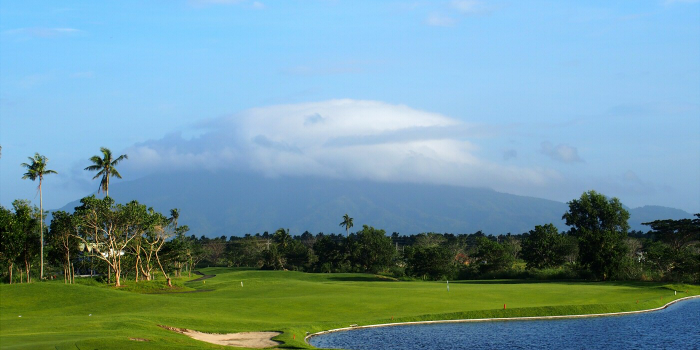
Features
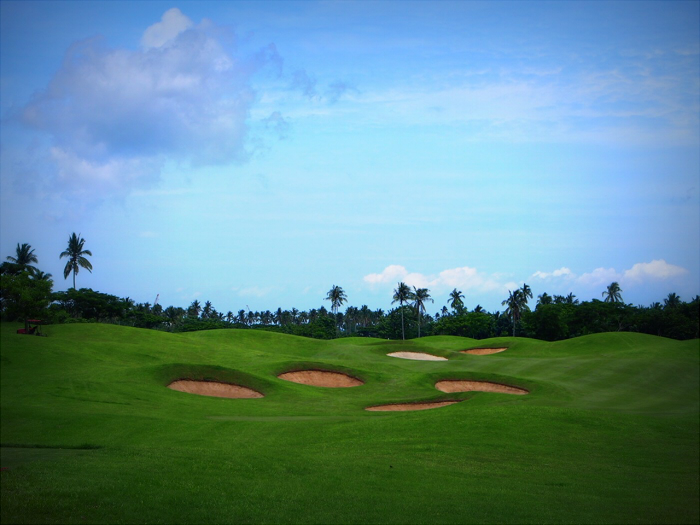
Each hole is modeled on a world-famous course. Every hole features challenging bunkers or ponds, making it a demanding course
attractive enough to be selected among the top 30 courses in the Philippines.
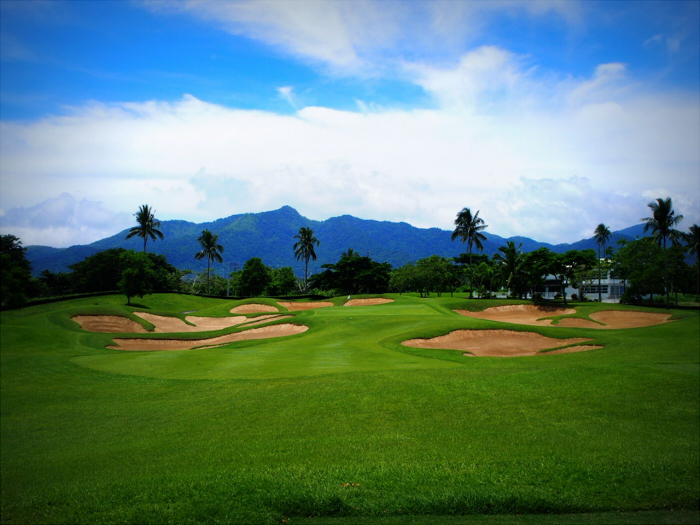
| Holes | 18 holes in total Par 72, 6,560 yards |
| Green fee | * Member introduction (or accompaniment) required Weekdays: 1,300 PHP Weekends/holidays: 2,000 PHP |
| Hours | Hours: 9:00 – 17:30 |
| Green type | Tifton and Tifdwarf grass |
| Golf cart | Yes (fairway driving allowed) |
| Rental clubs | Yes |
| Bathing facilities | Lockers Hot shower: yes Sauna: yes Jacuzzi: yes |
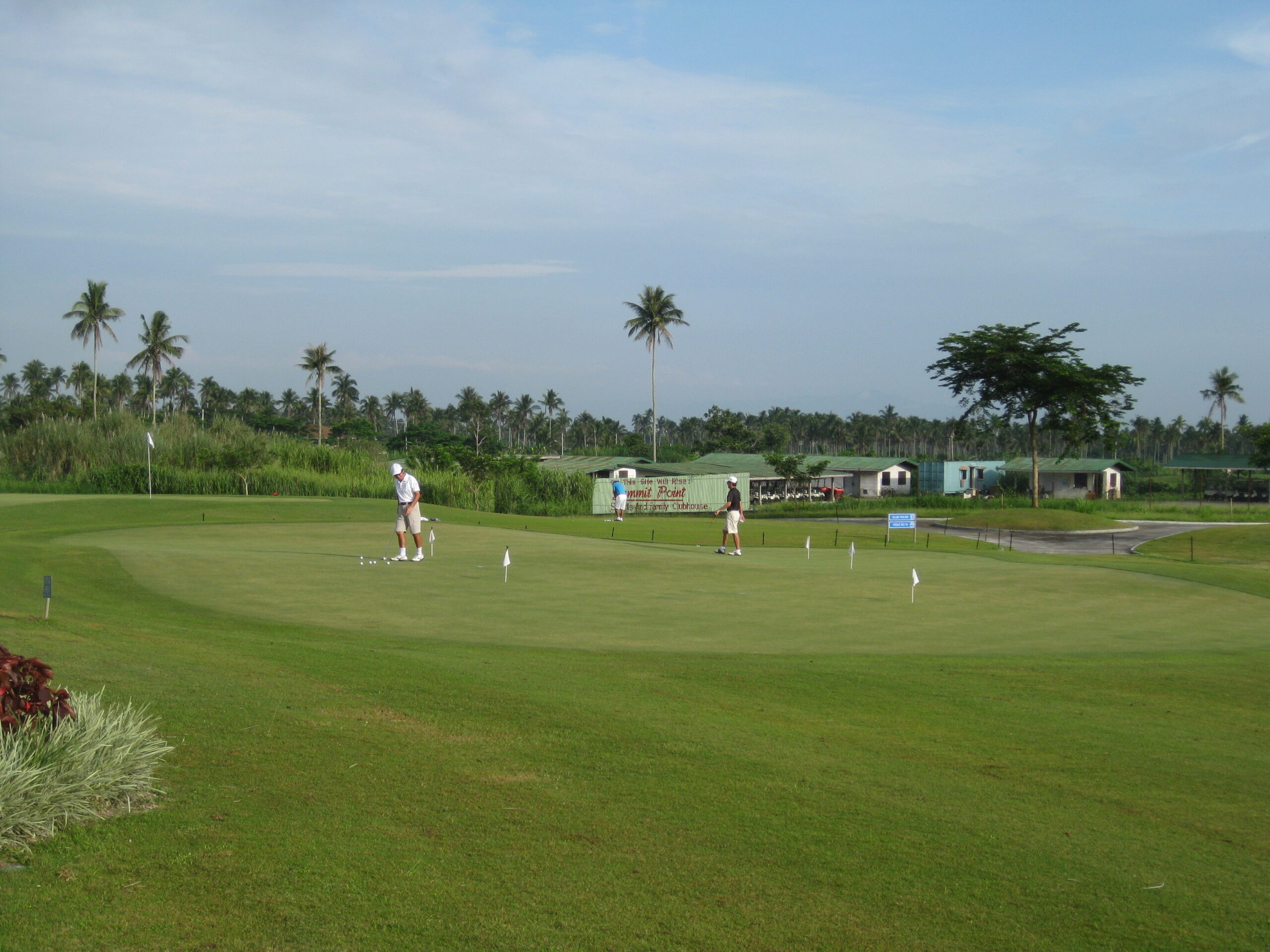
There is a practice green — an ideal environment for quality preparation before your round.
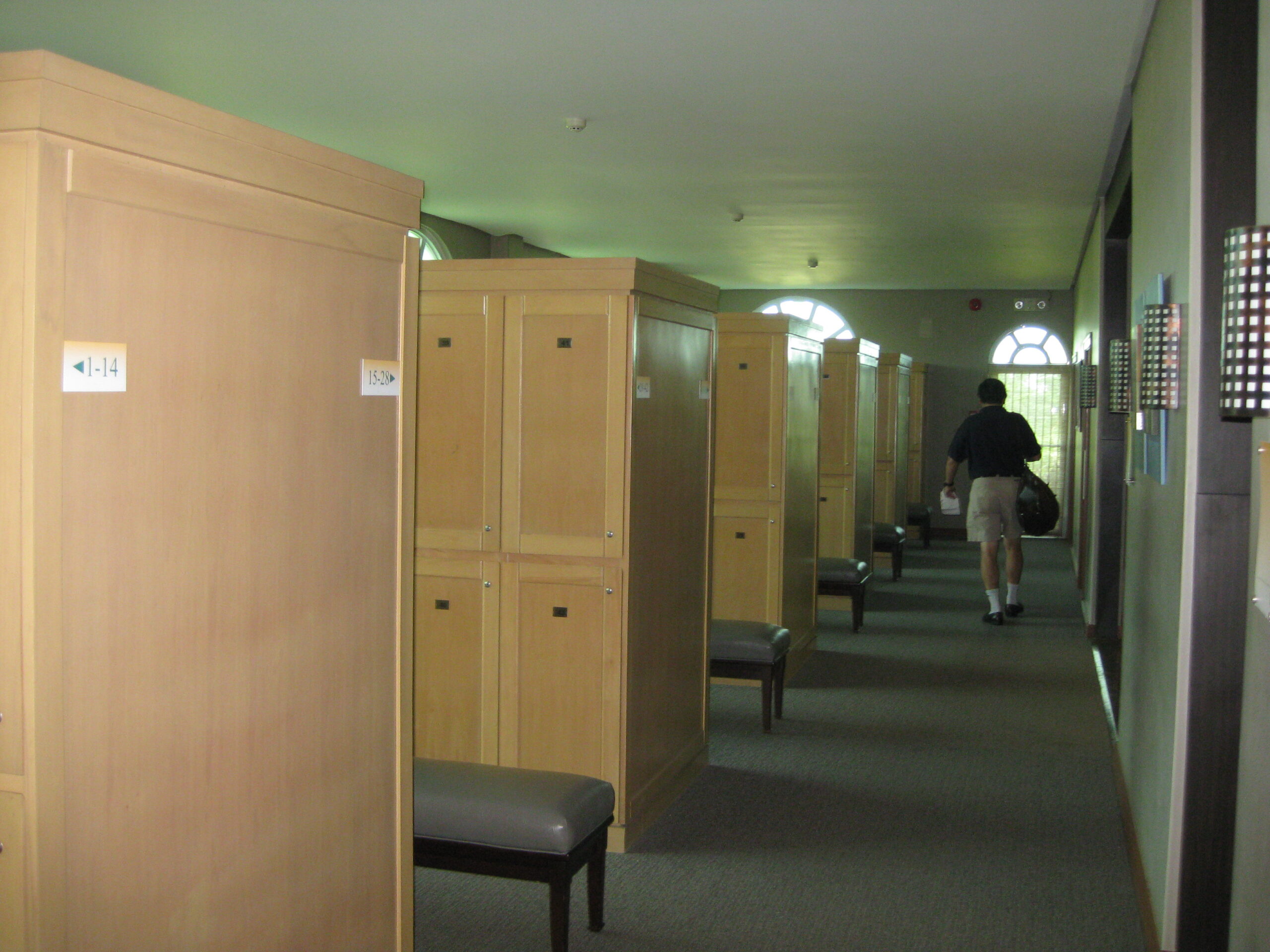
The locker rooms are clean and spacious, letting you prepare for your round stress-free.
Golf study program fees
Standard plan
| Room | 1 week |
|---|---|
| Single room | 194,000 JPY |
| Twin room | 179,000 JPY |
Weekend plan (surcharge)
| Plan | 3 nights / 4 days (Thu, Fri, Sat) |
|---|---|
| 1-person plan | 170,000 JPY |
| 2-person plan | |
| 3-person plan |
Options
| Changing from driving range to a round |
|---|
| 15,000–20,000 JPY per time |
* Individual arrangements such as accommodation upgrades or more round lessons are possible
on request. Please feel free to ask.
What the fee includes
- English lessons (one-on-one)
- Golf lessons (group)
- Accommodation (including weekday cleaning)
- Meals (3 meals on weekdays)
- Transportation
- Driving range fees
- Green fees
* Caddie fees are not included.
Costs paid after arriving in the Philippines
Paid in Philippine pesos after arriving in the Philippines
| SSP (Special Study Permit), every 24 weeks | 7,000 PHP |
| Visa extension Required if you stay in the Philippines for more than 30 days | From 3,030 PHP |
| ACR I-Card (Alien Certificate of Registration), for stays of 59 days or more | USD 50 |
| Utilities | 1,000 PHP/week |
| Pocket Wi-Fi Only if needed | 1,000 PHP/week |
| Laundry Mon–Fri, same-day return | 210 PHP per load |
Typical airfares (Cebu Pacific)
Fares to Manila on low-cost carriers such as Cebu Pacific
rise sharply in peak season (July–August, December–January, Golden Week, spring break)
and are relatively cheap in the off-season (June, September–November, February).
[Airfares by season]
- Peak season: July–August, December–January, Golden Week and spring break — 70,000 to 120,000+ JPY round trip
- Off-season: June, September–November and February — 40,000 to 70,000 JPY round trip
[Tips for cheaper fares]
- From just after New Year, when the year-end rush ends, through February, fares are cheap.
- Late May is in the dry season, with little rain and pleasant weather, and fares tend to be cheaper.
- Early-bird discounts can make fares even cheaper, so book early.
Student Voices

② English level: around TOEIC 700
③ Golf score: average around 90
④ How did you learn about the program: I know the owner
⑤ Did you bring your own clubs: Rental clubs
⑥ Comments
I started playing golf after COVID and recently began breaking 100 consistently, so I was looking for an intensive training camp to improve further. Grandline, whose owner I happened to know, had started a golf study program, so after discussing various things I tried it for a week. I could handle the driving range reasonably well, so I considered starting with round lessons, but to get used to communicating with the coach I began with practice at the driving range. In the morning I learned general golf terms and basic English for body parts and movements, then took about three hours of lessons in the afternoon. In the actual lessons, some English expressions differed from the golf terms used in Japan (especially for body movements and ball flight), so I was glad I had English lessons in the morning.
By the third day I had got fairly used to communicating with the coach in English, and after discussing with the school and coach, they adjusted the schedule so that I had two days of round lessons for an extra 15,000 JPY. On the first round lesson day we played the South course at Canlubang. It was my first round lesson playing the course with a coach, and it was very instructive. In fact it was my first time playing a round abroad at all, and I was surprised that each player has their own caddie who rakes bunkers and handles the pin on the green, so you can concentrate on playing, and that you can drive the cart right up to your ball on the fairway.
The turf conditions at Philippine courses (especially the rough) are quite different from Japan, and being taught on the spot, one-on-one, how to choose clubs, position the ball and swing according to the turf condition and direction was extremely educational. I’m just an amateur, but I felt I glimpsed why even pros need to practice at foreign courses to win on overseas tours (lol). On the second day we played the North course at the same club. Even at the same club, the turf on the South and North courses was completely different, and the green speeds were quite different too, so I was grateful to be taught specific variations for approaches and around the green on the spot. Personally, the par 3s, all basically 160+ yards (and the first two on the front nine over water), were challenging, but I could request the same caddie as the first day, which helped me get the right club smoothly. On the first day the coach just played along and watched me, but on the second day he also showed me his actual play — he basically reached the par 5s in two, a completely different level. It was also fun to watch a tournament pro’s round up close.
It was my first time playing golf and taking lessons abroad, but in the Philippines the course staff and caddies were very cheerful (and quite easygoing at times), and tee-off times and dress codes were flexible, so I could enjoy it casually. Next time I’d like to use a holiday and come back for lessons with some specific challenges in mind beforehand.
② English level: around TOEIC 600
③ Golf score: average around 90
④ How did you learn about the program: Introduced by an acquaintance
⑤ Did you bring your own clubs: Rental clubs
⑥ Comments
An acquaintance who studied at Grandline in the summer invited me to join the golf study program. Because of work it was hard to take a full weekday week off, so I asked the school whether an irregular 3-night/4-day schedule, arriving Thursday and leaving Sunday, was possible, and they accepted, so I joined with my acquaintance. As the schedule was short, I asked for an English lesson after arriving on Thursday, a round lesson on Friday and a normal round on Saturday, and they arranged the schedule very flexibly. I had played in Hawaii, so I wasn’t too worried about golf abroad, but since it was a chance to take lessons, I first learned the golf English needed to at least understand what I was being taught, then took the round lessons. The lessons were held at Canlubang, a course well known among Japanese residents as the venue for competitions of the Japanese Association and Japanese Chamber of Commerce. As I hadn’t practiced at a driving range, the coach checked my swing and distance at the practice range inside Canlubang and gave basic lessons around the green on the practice green. Tee-off times seemed flexible: after about an hour of practice, the round lesson started when the 1st tee became free. Canlubang has North and South courses, and the lesson was on the South course from the white tees. I’m not sure I caught it exactly, but I was advised that the blue tees here are the championship course and very difficult unless you hit long, so we chose the white tees.
My impression of the course was many carries over ravines and ponds, and par 4s requiring relatively long second shots of 160–170 yards. Unlike Hawaii, at Philippine courses each player has their own caddie who handles club selection, finding balls and everything around bunkers, so you can enjoy “lordly golf”. My caddie was a young caddie of about 20, and when I skied a tee shot he enthusiastically chanted “Su~shi~, Tempu~ra~, Oishi~” which surprised me a little. Each person can also use their own cart. The coach accompanied us throughout the lesson; besides bunker shots and play around the green, when I mishit, he analyzed the cause, demonstrated on the spot, and let me hit 3–4 balls imitating him to improve. At the start, the coach let us choose whether he would play with us or focus on coaching, and we chose to have him watch us play. Philippine turf requires certain techniques, so learning various techniques from the coach was very useful.
The next day, the school owner arranged for me to join a gathering of Japanese expatriates in the Philippines. The course was Tagaytay Midlands, inside a resort area, with very clean facilities and course. The par 4s felt a bit long, but the turf felt close to Japanese courses and I could play comfortably. The Japanese residents seemed to play golf much more relaxed than in Japan, and I also joined the get-together after golf, which was great fun. In the Philippines you have a driver when moving around, so you can enjoy a drink during and after play — it made me want to be posted to the Philippines (lol).
② English level: around TOEIC 800
③ Golf score: average around 120
④ How did you learn about the program: Introduced by an acquaintance
⑤ Did you bring your own clubs: Rental clubs
⑥ Comments
I had a chance to visit a friend living in Manila and thought I’d study English while there, so I asked my friend whether there was an English school in Manila and was introduced to Grandline. At first I planned to take English lessons in the morning and go sightseeing in the afternoon, but on the website I found a plan with English plus golf lessons. I had just started going to golf courses after starting work, so I chose English plus golf. I also wanted to study business English for work, so I had business English lessons for the first three days and English plus golf lessons for the last two. The first lesson was at the driving range, at a range in Alabang about 30 minutes by car from the school in Makati. Luckily, Mr. Artemio Murakami, who supervises Grandline’s golf program, was available and coached me directly. (In fact I only learned from Grandline’s website that he is the amazing coach of Yuka Saso.) Artemio speaks both English and Japanese and asked which I preferred, but I wasn’t yet confident I could understand golf instruction in English, so the lesson was in Japanese. His teaching was concise and easy to understand: you don’t need to move your body more than necessary to get the distance each club offers. He focused first on body movement and swing practice to catch the ball in the center of the club head. I thought I was fairly athletic, but golf is difficult, and until then my drives went just over 120 yards — after about 30 minutes of coaching I was hitting about 180 yards. Seeing such visible improvement was a big motivation.
The next day, not with Artemio but with a Filipino tournament pro coach, I had a round lesson. This coach is also very accomplished, having been a Philippine money leader. I had asked for a round lesson but wondered whether it was too early as a beginner — in the end I’m glad I did it. As I was still new to courses, they let me play long ravine carries from the drop area, but learning how to get out of bunkers and how to hit approaches on a real course was very helpful. I want to practice more, gain experience and come back.