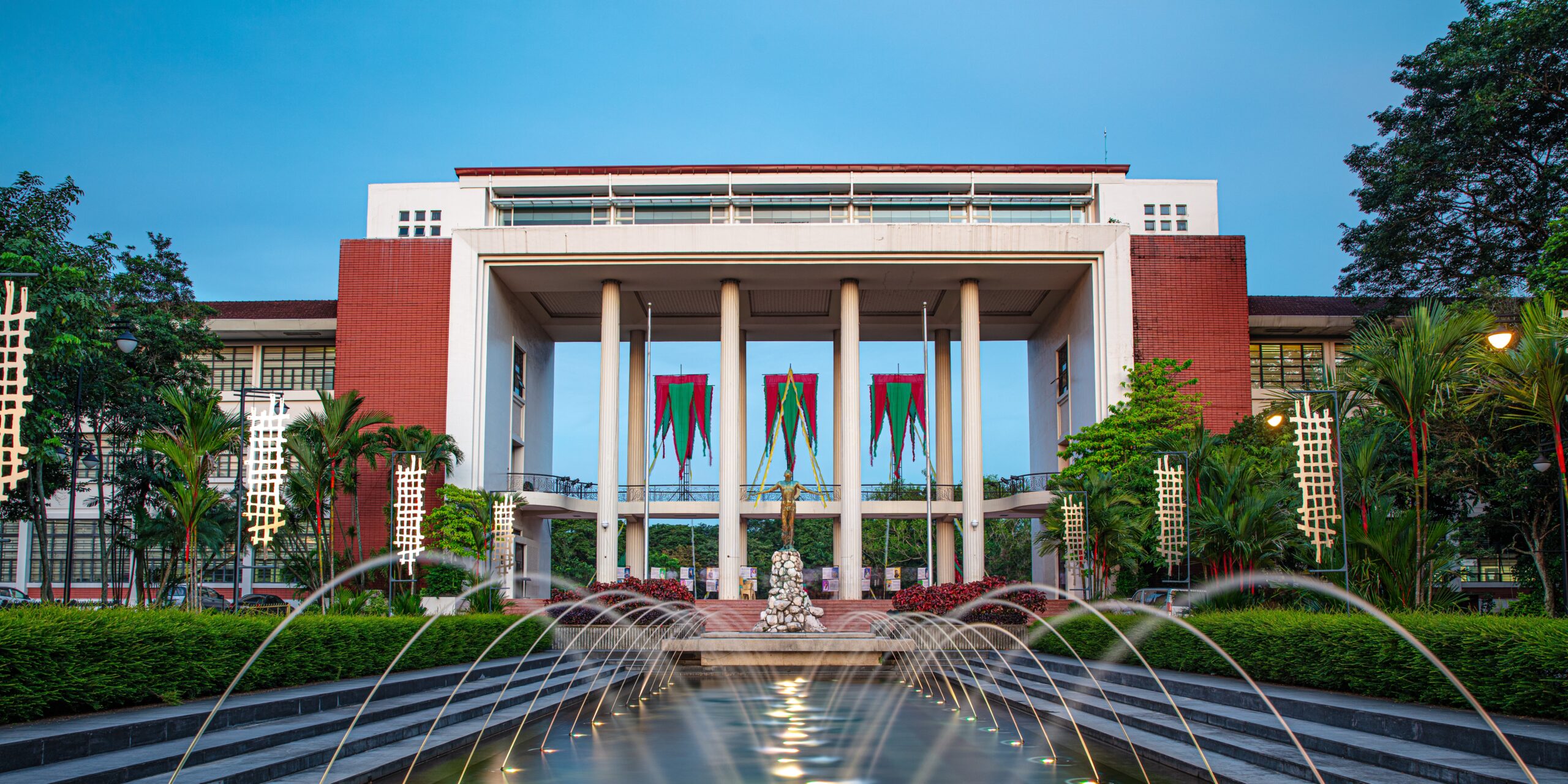
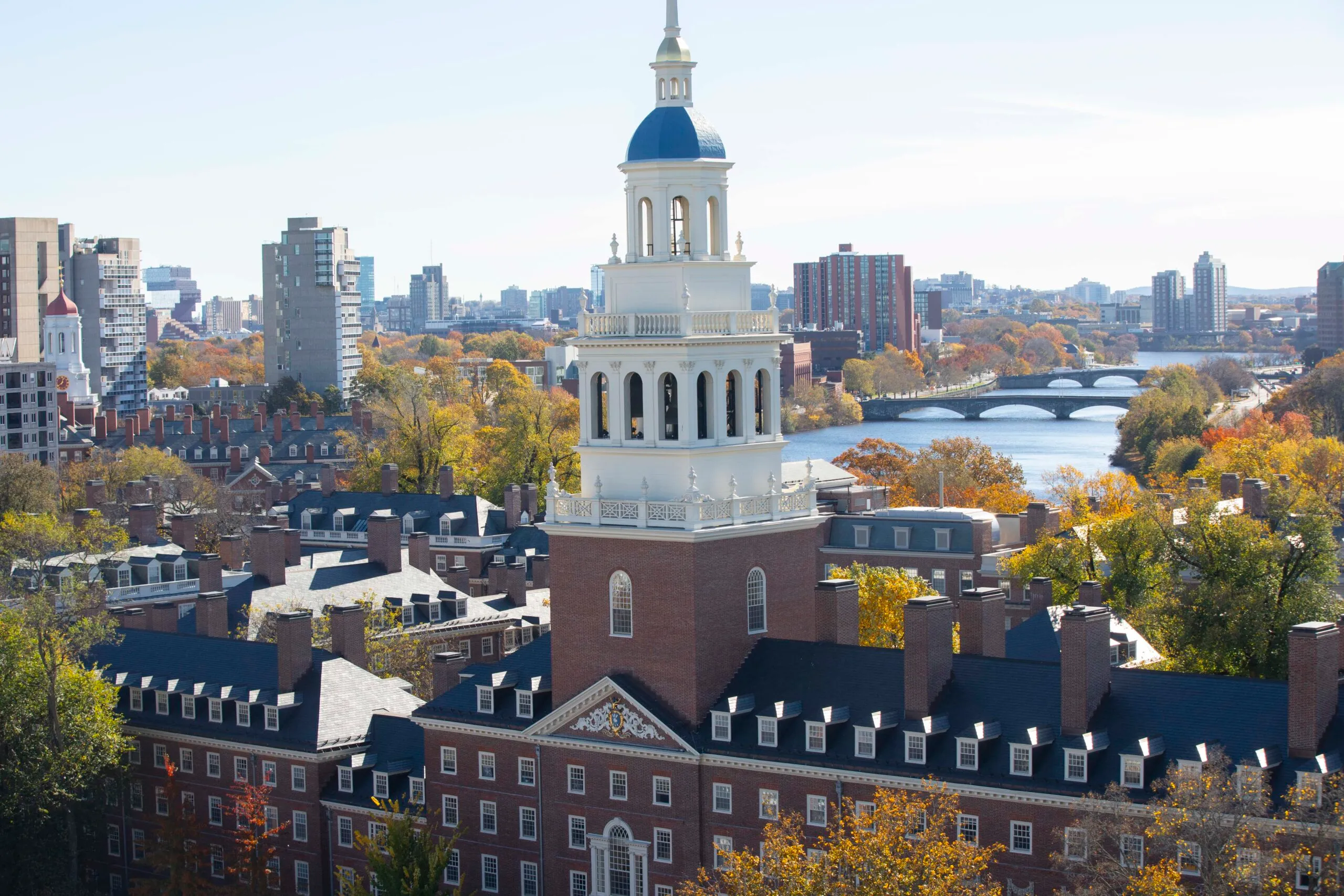
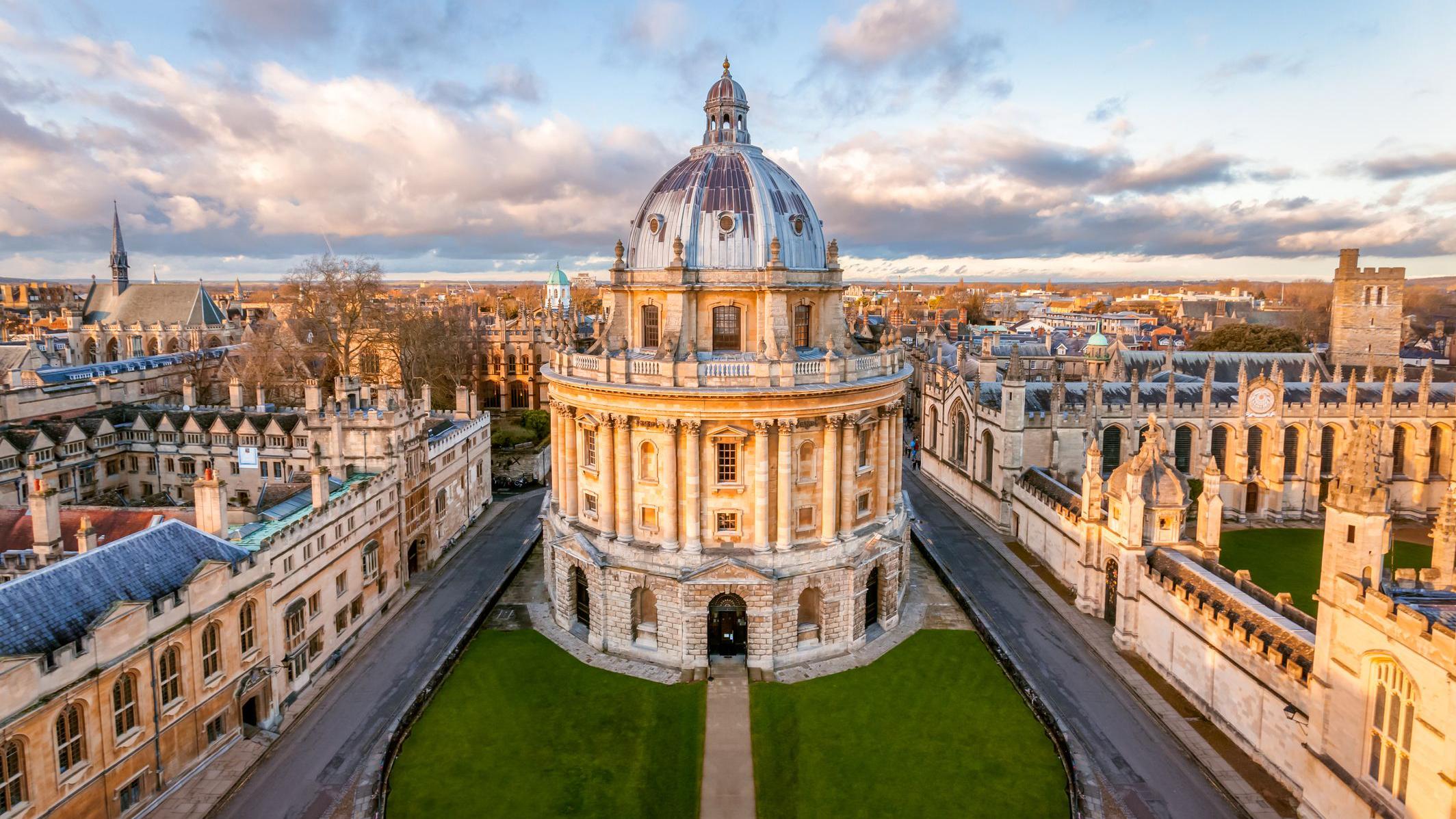
Course overview
Goal: Admission to top overseas schools
Subjects: English, Social Studies, Math, Science
Age: 10+ (4th grade and above)
Period: Year-round (April to March)
Teachers: Filipino
Location: Manila, Philippines (Makati)
Format: One-on-one (online/in person), group lessons (in person only)
For: Those considering top overseas schools or international schools
Recommended for
(Elementary / junior high students)
・Those going on to junior high or high school abroad
・Those considering entering or transferring to an international school
(High school students)
・Those considering top universities abroad
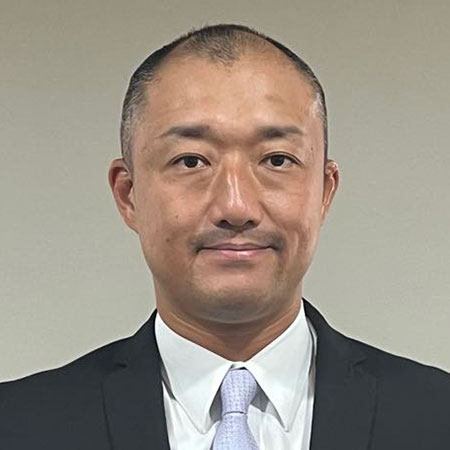
Junki Kanemitsu
CEO
“Building a global perspective and skills through early learning greatly broadens your child’s future options. In particular, entering a prestigious overseas school creates future financial and personal freedom. This program aims to build the academic foundation needed to enter prestigious overseas schools and international schools.”
Supervisor profile
HIROMITSU MATSUI
・15 years of experience in energy/chemical commodity trading, including several business exits/divestitures and legal disputes. – In a previous role, contributed to continuously balancing supply and demand of petroleum and petrochemical products. In the sulfur business in particular, worked with a diverse team of 30 people across Japan, Asia and the Middle East, contributing steadily to the stability and supply of Japan’s energy.
– After entering the Sloan Program at London Business School, joined the school’s Energy & Environment Club, learning the latest developments in the energy sector in addition to management skills and knowledge.
– Having worked with many companies in more than 10 Asian countries, I understand how to manage cross-cultural and cross-border business.
More than 2 years of experience in shipment/inventory coordination and project management in Indonesia. – I also have project management experience in both Indonesia and Japan, and can coordinate relationships with external organizations (shareholders, banks, partners, external law firms) and internal functional teams (finance, accounting, legal).
Requirements for entering a U.S. university
To enter a U.S. university you need a high school (or equivalent) diploma. A Japanese high school diploma or equivalent qualification is accepted.
Many U.S. universities require standardized test scores. Typical tests include:
– SAT (Scholastic Aptitude Test)
A university admission test commonly required by many universities, with math, reading and writing sections.
– ACT (American College Test)
Accepted by many universities alongside the SAT, with English, math, reading and science sections.
– TOEFL (Test of English as a Foreign Language)
An English proficiency test for non-native speakers, required by most universities as proof of English ability.
– IELTS (International English Language Testing System)
Like TOEFL, used to prove English proficiency.
Studying in the U.S. requires a student visa (F-1). After receiving admission, you must apply for and obtain the visa. The application requires Form I-20 (certificate of eligibility) and proof of finances.
U.S. universities place importance on your high school grades. You must submit your transcript with your application, and good grades in subjects such as math, English and science are especially expected.
Many universities require letters of recommendation from teachers or mentors, which attest to your academics, character, leadership and community contributions.
U.S. universities may require an essay or personal statement conveying your background, goals and motivation. It plays an important role as a chance to present yourself.
You may also be asked to submit a résumé including extracurricular activities, volunteering, internships and leadership experience. U.S. universities in particular value activities beyond academics.
Some universities conduct interviews as part of admissions, giving them a chance to know you better. Interviews are usually held online.
International students need documents proving they have the financial resources to study and live in the U.S. (such as bank balance certificates), confirming their ability to cover tuition and living costs.
Four processes provided by Grandline
To address the requirements for U.S. university admission above,
this program helps you improve the following four skills.
1. Interview preparation

Many prestigious overseas schools place great weight on interviews, which aim to gauge applicants’ unique qualities and real character. You need to be ready for any question.
To stand out from other applicants, we give precise advice tailored to each student’s strengths and weaknesses, and through mock interviews provide thorough support so you adapt to Q&A in English and grow with certainty.
2. Essay preparation
An essay is a short paper in which applicants to U.S. and other overseas universities present their motivation and views on a given theme. Themes and word counts vary by university, but you need a logical, clear structure.

We analyze question trends at your target universities and carefully select topics. With corrections by experienced teachers, we aim for essays that bring out each student’s individuality.
3. IELTS / TOEFL preparation

IELTS and TOEFL scores are important when applying to universities in the U.S., the U.K. and elsewhere.
Prestigious overseas schools require
・IELTS: 7.0 or higher (out of 9.0)
・TOEFL: 100 or higher (out of 120)
— scores close to the maximum.
We provide a customized study plan based on each student’s target score, strengths and weaknesses, and aim to raise scores with specific strategies and guidance from teachers who know the IELTS and TOEFL exams well.
4. Improving standardized scores (SAT)
The SAT is a standardized college admission test run by the College Board in the U.S. It consists of English (reading) and Math, requiring logical understanding in math as well as English knowledge.

We turn mathematical formulas into problems based on real-world examples to pursue the essence of math, deepening understanding and developing the skills to tackle applied problems.
Why is math so important?
Math is considered the most important subject at overseas universities for developing logical thinking and problem-solving. Mathematical knowledge plays a fundamental role in many fields such as science, engineering and economics, laying the foundation for specialized knowledge.
A day in the program (example)
For study-abroad students
| Lesson | Time | Content |
|---|---|---|
| Period 1 | 9:30 | English (speaking) |
| 10:15 | Break | |
| Period 2 | 10:20 | English (listening, reading) |
| 11:05 | Break | |
| Period 3 | 11:10 | English (writing) |
| 11:55 | Feedback (15 min) | |
| 12:10 | Lunch break | |
| Period 4 | 13:30 | Vocabulary review + new words |
| 14:15 | Break | |
| Period 5 | 14:20 | Subject class |
| 15:05 | Break | |
| Period 6 | 15:10 | Subject class |
| 15:55 | Break | |
| Period 7 | 16:00 | Subject class |
| 16:45 | Feedback (15 min) |
- One subject per day. For example, on a “decimals” day, the three afternoon periods are used to study decimals.
- Feedback is given to the child, but parents can listen too.
For day students
| Schedule |
|---|
| Monday–Thursday * No group lessons on weekends (one-on-one only) |
| Friday (make-up day) |
| Weekends (one-on-one lessons) |
| Morning | 10:00 – 12:00 |
| Afternoon | 14:15 – 16:15 |
| Evening | 16:30 – 18:30 |
| Night | 19:00 – 21:00 |
| Monday | English |
| Tuesday | Math |
| Wednesday | Science |
| Thursday | Social Studies |
Subject lessons
Basic English
Based on reading and listening to somewhat longer stories in English, students learn to write and talk about their impressions. You can choose “general English” or “academic English”.
Review
The first afternoon period reviews material up to the previous day.
Math, Science, Social Studies
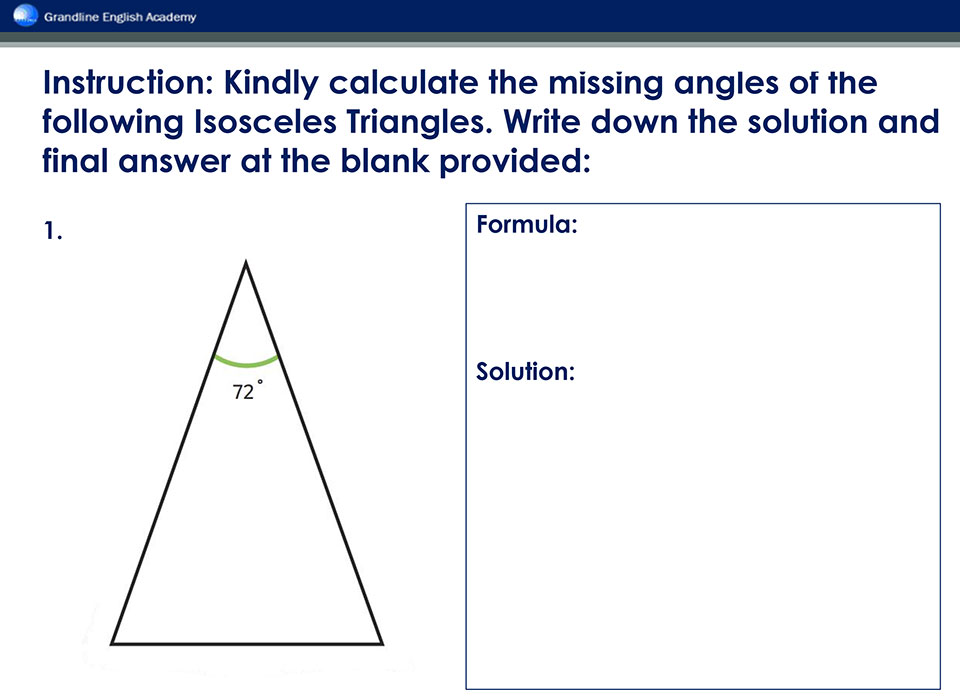
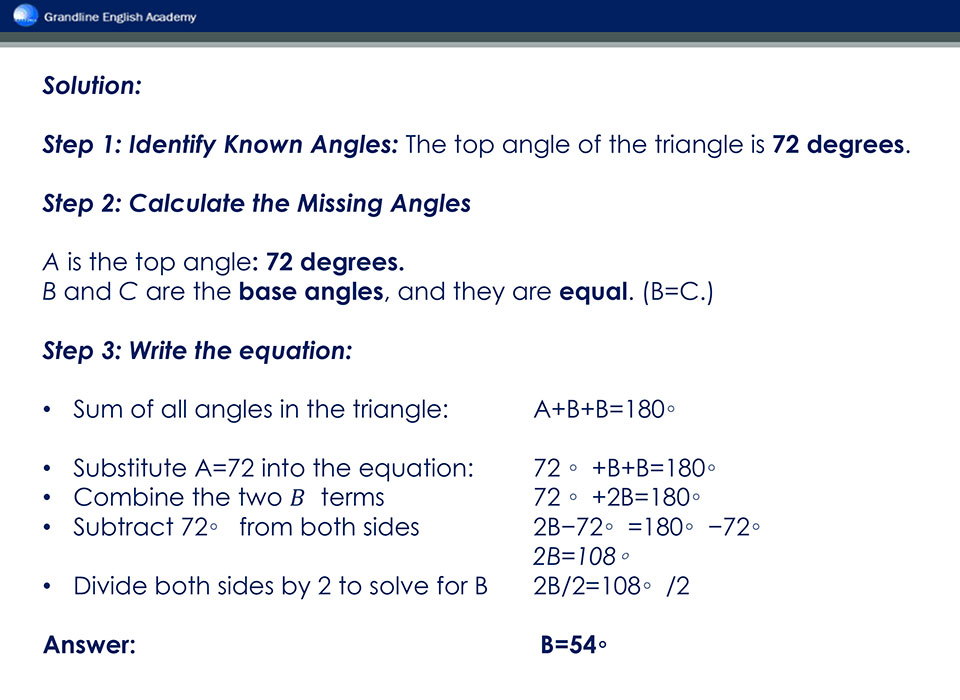
Learn math, science and social studies in English. Examples: calculating the area of an isosceles triangle, series and parallel circuits, political systems around the world.
Curriculum
* The curriculum is based on the curriculum guidelines of Japan’s Ministry of Education (MEXT)
・Subject lesson topics (examples)
Mathematics
Mathematics
・Elementary students
- Basic concepts of positive and negative numbers, number lines, and simple addition and subtraction.
- Review of the four basic operations (integers and decimals) and the order of operations.
- Fundamentals of percentages with simple exercises (e.g., calculating discount rates).
- Ratios and their applications (e.g., recipe adjustments).
- Practical use of percentages and ratios in applied problems.
- Basic properties of geometric shapes (area and perimeter of rectangles, squares, triangles, and circles).
- Applications of geometry in real-life scenarios (e.g., measuring room areas).
- Introduction to algebraic expressions (calculations using letters instead of numbers).
- Simple linear functions (e.g., relationships between price and quantity).
- Solving linear equations and practicing basic problems.
・Junior high students
- The Necessity and Meaning of Square Roots (Rational and Irrational Numbers)
- Expansion and Factorization of Expressions
- Applications of Simultaneous Equations
- Solving Quadratic Equations (Completing the Square and Using the Quadratic Formula)
- Basic Methods and Applications of Constructing Plane Figures
- Composition and Representation of Solid Figures (Perspective Drawings, Nets, and Projection Diagrams)
- The Pythagorean Theorem and Its Proof
- Characteristics and Applications of the Function y=ax²
- The Necessity and Applications of Histograms and Measures of Central Tendency
- The Necessity and Methods of Calculating Probability
Science
Science
・Elementary students
- Substances and Energy Around Us (Magnets, Air, Water, Light, Sound, etc.)
- Observation and Classification of Living Organisms (Characteristics, Ecology, and Growth of Animals and Plants)
- Phenomena in Daily Life (Forms and Changes of Water, Weather, and Meteorological Phenomena)
- Exploration of Earth and Space (The Moon, Stars, Earth’s Movements, and the Structure of the Universe)
- Changes in Matter (State Changes of Water and Air)
- Functions of Electricity (The Mechanism of Circuits and the Use of Electricity)
- Force and Motion (Movements of Objects and the Effects of Forces)
- Environment and Sustainability
- Life and Science Technology
- Methods and Applications of Experimentation and Observation
・Junior high students
- Basic Concepts of the Three States of Matter (Solid, Liquid, Gas)
- Conditions for State Changes (Melting, Solidification, Evaporation, Sublimation)
- Basics of Chemical Reactions (Differences Between Physical and Chemical Changes)
- Writing and Interpreting Chemical Equations
- Energy Conversion (Thermal Energy, Chemical Energy)
- Types and Effects of Forces (Gravity, Frictional Force, Elastic Force)
- Newton’s Laws of Motion (First Law and Second Law)
- Third Law (The Law of Action and Reaction)
- Growth Processes in Living Organisms (Germination of Plants)
- Mechanisms of Heredity (Basics of DNA and Genes)
Social Studies
Social Studies
・Elementary students
- Life and History of Local Communities
- Geography of the World and Characteristics of Major Countries
- Agriculture, Fisheries, and Industry in the World
- History and Culture of the World
- Transportation and Logistics (Methods of Moving Goods and People)
- Disasters and Disaster Prevention Measures
- How to Aim for a Sustainable Society
- Using Maps and Globes
- Resources and Energy Necessary for Life
- Historical Events and Their Impact
・Junior high students
- Basic Structure of Modern Society
- The Role of Government and Political Systems
- Political Systems Around the World and Democracy
- Historical Background: Ancient Civilizations and the Origins of Law
- Fundamentals and Roles of Law
- Legal Systems and Courts Around the World
- The Mechanisms of Taxes and Public Finance
- Historical Background: Formation of Modern Nation-States
- Public Services and Social Security
- Global Economic Systems
* Lesson content may change in part.
Examples of materials used
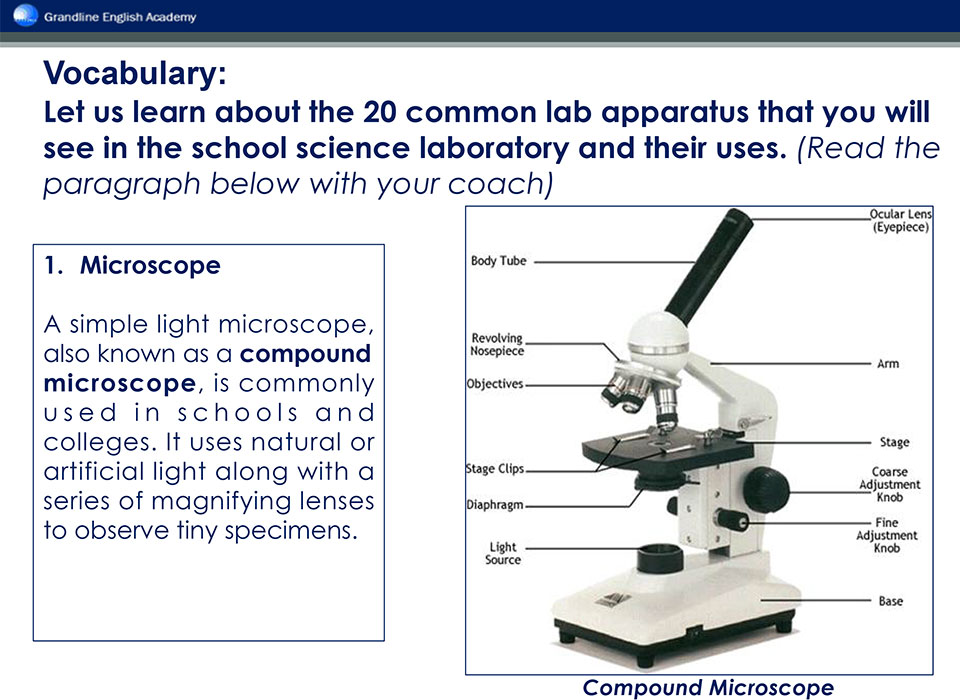
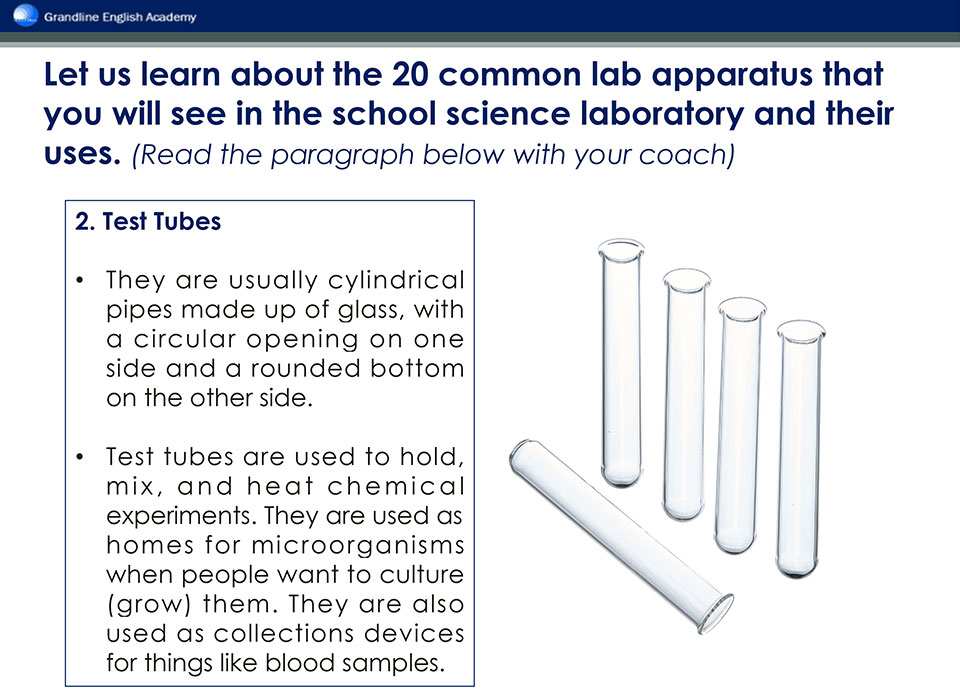
We use original materials based on Japan’s MEXT curriculum guidelines, combined with international school content.
Teachers
Experienced Filipino teachers design this program’s curriculum.
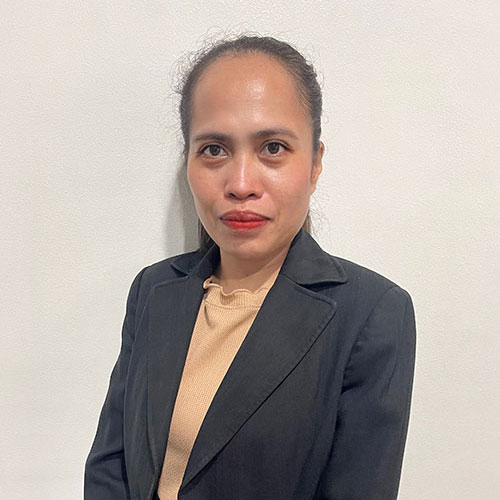
Teacher Daisy
Graduated with a Bachelor of Secondary Education (major in English) in 2014 and passed the teacher licensure exam the following year. After working as an online English teacher in 2016–2018, she joined Grandline in 2019, teaching Japanese students and handling quality control of materials and reports. Operations manager since 2023.
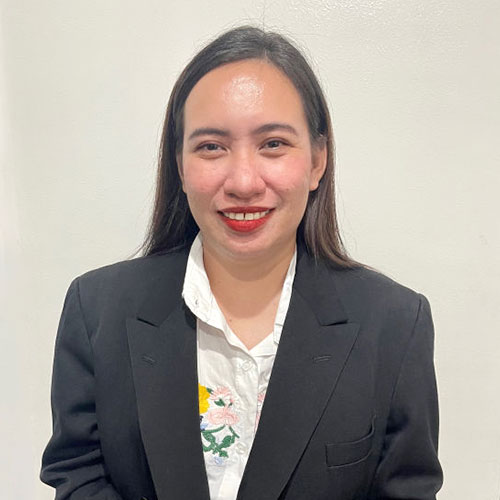
Teacher Dimple
After graduating in English literature in 2012, she taught English at the University of the Visayas. Since 2019 at Grandline, she has taught Japanese students, created materials and trained teachers. Head of materials development since 2023.
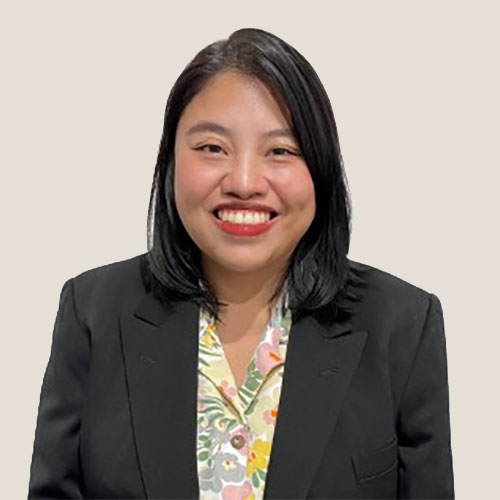
Teacher Jamile
After passing the teacher licensure exam, she taught children at a preschool from 2011. Since 2019 at Grandline, she has taught Japanese students including elementary pupils. With extensive experience teaching elementary students, she creates the summer school materials.
Program fees
| Period | Blakes Tower fees (JPY) | Tiara Hotel fees (JPY) |
|---|---|---|
| 1 week | 111,000 JPY | 123,000 JPY |
| 2 weeks | 227,000 JPY | 253,000 JPY |
| 3 weeks | 343,000 JPY | 383,000 JPY |
| 4 weeks | 459,000 JPY | 513,000 JPY |
What the fee includes
- Enrollment fee
- Lessons (including materials)
- Breakfast (weekdays only)
- Accommodation (including weekday cleaning)
Fees for day students (no accommodation)
| One-on-one lessons / per subject | Fee (PHP) |
|---|---|
| 1 hour | 600 PHP (12% VAT) / month |
| Monthly (once a week) | 2,400 PHP (12% VAT) / month |
| 6 months paid in advance | 2,280 PHP (12% VAT) / month |
| 1 year paid in advance | 2,160 PHP (12% VAT) / month |
| Group lessons / per subject | Fee (PHP) |
|---|---|
| 1 hour | 300 PHP (12% VAT) / month |
| Monthly (once a week) | 1,200 PHP (12% VAT) / month |
| 6 months paid in advance | 1,140 PHP (12% VAT) / month |
| 1 year paid in advance | 1,080 PHP (12% VAT) / month |
* 1 subject / once a week: 2 hours
* Up to 4 subjects
* Does not include special courses such as summer programs
Costs paid after arriving in the Philippines
・Paid in Philippine pesos after arriving in the Philippines
| SSP (Special Study Permit), every 24 weeks | 7,000 PHP |
| Visa extension Required if you stay in the Philippines for more than 30 days | From 3,030 PHP |
| ACR I-Card (Alien Certificate of Registration), for stays of 59 days or more | USD 50 |
| Utilities | 1,000 PHP/week |
| Pocket Wi-Fi Only if needed | 1,000 PHP/week |
| Laundry Mon–Fri, same-day return | 210 PHP per load |
Accommodation details