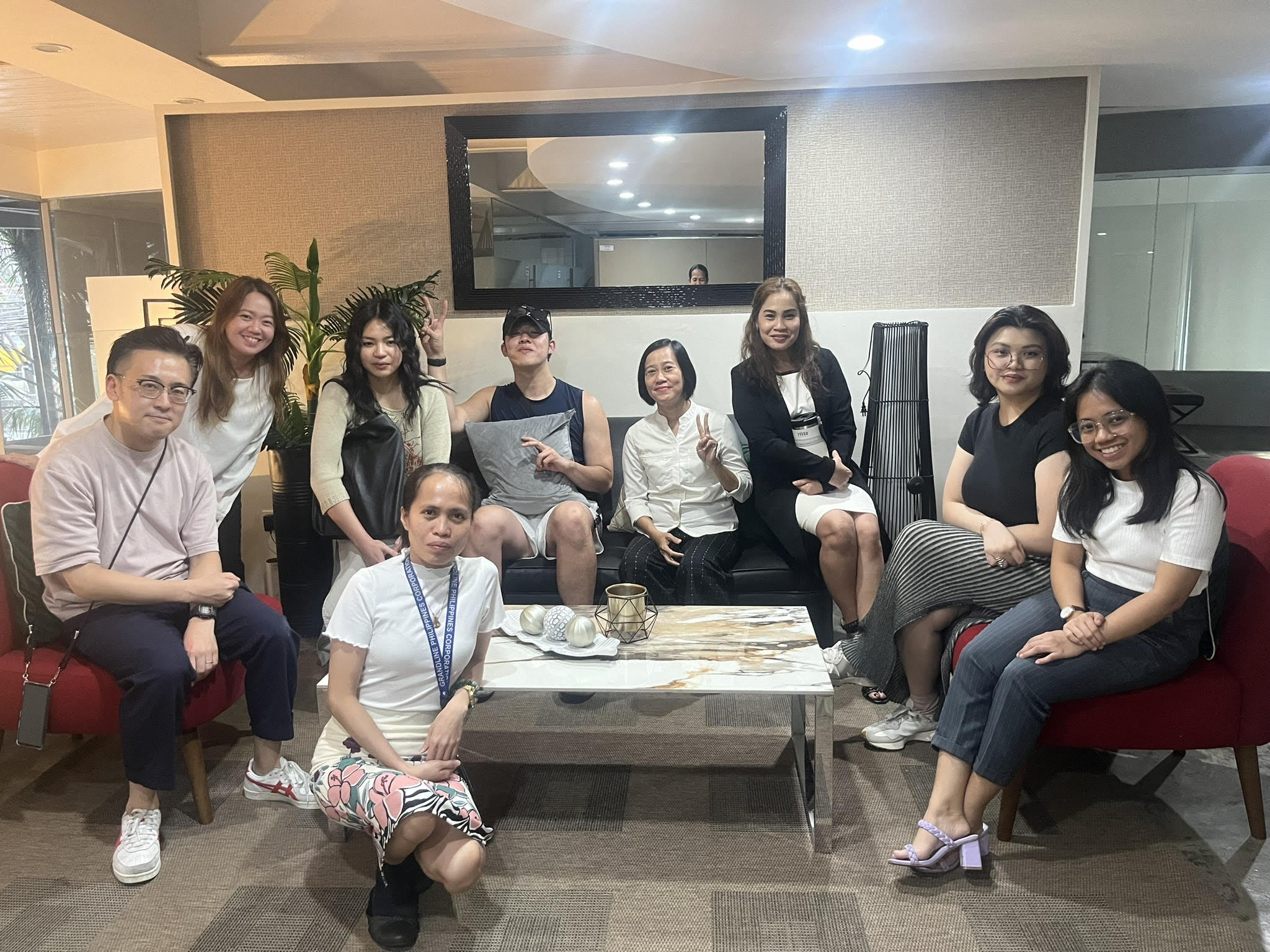
Male, 23, university student, 3 weeks in the Philippines.
English level 2 (High Beginner) → level 3 (Low Intermediate)
What made you decide to study in the Philippines?
It started when my partner moved to the Philippines for work.
I had a vague goal of working abroad someday and had once considered language study, but couldn’t take the first step. When I visited the Philippines to see my partner and interacted with locals in Manila, I realized how lacking my English was. That frustration became my driving force, and I decided to study in the Philippines to learn English seriously.
What did you keep in mind during your study?
I focused on “letting go of embarrassment”.
As a result, my conversations gained rhythm and speaking English became easier. At first I tried to make my grammar perfect in my head before speaking, because of pride — I was embarrassed to make mistakes. That created pauses, and anxiety made me speak even less, a vicious circle. But my teachers told me “take your time” and kindly accepted my clumsy English, and things improved. It’s far from perfect, but now I can hold conversations with few delays.
How was the curriculum?
Grandline gives a strong impression of “business-level English”, so I felt the bar was too high for an English beginner like me.
However, I could lower the level to “everyday conversation English”, and learning from the basics was the shortcut to growth.
They also adapted the curriculum to my wishes and weaknesses as below, so I could study efficiently.
Realized my vocabulary was lacking from lesson materials → self-study as homework
Understood my wish to focus on speaking → lessons emphasizing dialogue over materials
What was the atmosphere in class like?
The atmosphere at school was very friendly.
Even in class, we often got carried away with personal conversations and went off topic. It showed how good the teachers are at communication — it was easy to become friends. Compatibility varies, but they are basically all friendly. The closer you get, the more fun the lessons become. Other students at the time, from university students to professionals, also seemed to enjoy themselves throughout, chatting during breaks and spending time together. It was a fulfilling environment in which to grow.
Three weeks is short — did you feel a change in your English?
Very much.
I felt it most when I spent time with my Filipino friends.
Before studying, I couldn’t even understand our conversations, which was frustrating.
But after studying, the content strangely made sense and I could keep the conversation going. My Filipino friends were even more surprised than I was, which made me happy — it was the moment my effort paid off. As a beginner, my improvement may have felt bigger, but in those limited three weeks I gave up chances to socialize with other students during breaks and after school and immersed myself in English. My only reason was that since I was abroad, I wanted as much English as possible. Socializing with other students would surely have been fun too, but I have no regrets. Now I can confidently say my English has definitely improved.
What are your plans going forward?
- Score 800 on the TOEIC
- Work abroad
Through studying abroad and being surrounded by English, I started wanting to be based overseas. But I recognize my current English isn’t enough for business. First, I’ll keep studying every day to get a TOEIC score, and in the future become a business person who works globally with English as my weapon.
Many people worry about safety in Manila — were you worried?
Not particularly.
Because Japan is so safe, the comparison may make Manila seem unsafe. But I never once felt in danger after arriving.
I walked about 20 minutes to Grandline, and all I noticed was the heavy traffic.
That said, the risk of pickpocketing and theft is still high.
- Don’t walk alone late at night, when risks increase
- Choose a bag with a zipper
- Don’t keep valuables in your pockets
Taking a few precautions is enough to put your mind at ease.
Is there anything you felt in the Philippines or Manila that you’d like to tell future students?
- Don’t drink tap water directly
- Don’t flush toilet paper
- When buying eggs, check that none are cracked
- When buying vegetables, check that they aren’t spoiled
Apart from safety, these four points are about the only differences from Japan.
If you can accept Filipino culture and environment, I felt you can live as comfortably as in Japan.
Filipino food is often strongly flavored or sweet, but even if it doesn’t suit you, there are plenty of Japanese and Korean restaurants, so you won’t have trouble.
If you want to master business English efficiently, please see the details of studying in the Philippines.